
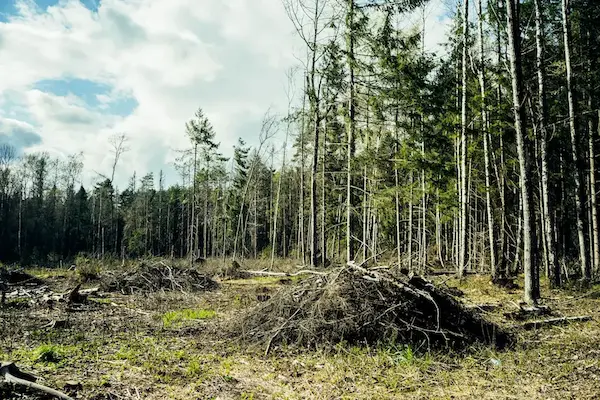
Land Clearing in Spartanburg, SC
Clear wooded, overgrown, or unusable property for the space you actually need. From dense brush and unwanted trees to larger clearing projects, we help prepare the land for its intended next use.
What Does Land Clearing Include?
Land clearing is not just cutting down a few trees. The job starts with looking at what is covering the property, what is preventing you from using it, and what needs to remain when the clearing is finished.
Trees, Brush, Overgrowth, and Dense Vegetation
On an overgrown property, we may be dealing with much more than mature trees. Thick brush, saplings, vines, volunteer growth, fallen limbs, and dense vegetation can make part of a lot difficult to walk, maintain, or use.
The amount that needs to come out depends on what you want to do with the land. Clearing an area for more usable yard space is different from opening a homesite, driveway, access lane, or a larger section of wooded acreage.
What Gets Removed and What Can Stay
Clearing does not automatically mean stripping the property bare. If you have healthy trees, a wooded boundary, shade trees, or other vegetation you want to preserve, those areas should be identified before the work starts.
I want to know what you are trying to accomplish with the property first. Once that is clear, we can separate what is in the way from what actually adds value to the finished site.
How Much Does Land Clearing Cost in Spartanburg, SC?
There is no honest flat price per acre without seeing what is actually on the property. A lightly overgrown acre with easy access is a very different job from dense timber, large stumps, steep ground, or a site where material needs to be hauled away.
Typical Land Clearing Price Ranges
These are useful planning ranges for Spartanburg-area properties, not fixed quotes. The final cost depends on what we have to remove and what you want the property to look like when the clearing is done.
Lighter brush, smaller saplings, thinner vegetation, and properties where machine access is straightforward.
Thick brush mixed with small or medium trees, heavier growth, or properties that require more cutting and machine time.
Dense wooded ground, larger trees, substantial stump work, difficult access, or clearing that requires more complete removal.
What Affects the Cost of Clearing Land?
When I look at a clearing job, acreage is only the starting point. What is growing on that acreage — and what has to happen to it — usually matters more.
Open ground with scattered brush clears much faster than dense saplings, vines, thick undergrowth, and closely spaced trees.
Larger trees require more work than small growth and can change the clearing method needed for the property.
Cutting vegetation at ground level is different from removing stumps or root balls for a future driveway, homesite, or building area.
Gates, narrow entrances, buildings, fences, slopes, and restricted access can make it harder to get equipment where the clearing is needed.
Steep, uneven, soft, or wet ground can slow production and affect what equipment can safely work on the site.
Mulching material on the property is a different scope from stacking logs, moving debris, or hauling material away.
Does Clearing Multiple Acres Cost Less Per Acre?
It can. Once equipment is on the property, clearing several similar acres may reduce the average cost per acre because mobilization and setup are spread across a larger job.
But acreage alone does not guarantee a lower rate. If one section is light brush and the next is dense timber, steep ground, or stump-heavy clearing, I would treat those as different parts of the job rather than pretend every acre costs the same.
The best comparison is the total scope of work, not just the number of acres shown on the property record.
What Is the Best Way to Clear My Property?
The best clearing method depends on what is growing there now and what you want the property to become afterward. I would not clear a wooded homesite the same way I would open up an overgrown backyard or reclaim several acres covered in brush and saplings.
Before deciding how aggressive the clearing should be, I want to know which trees you want to keep, whether stumps can remain, how the area will be used, and what kind of finish you actually need.
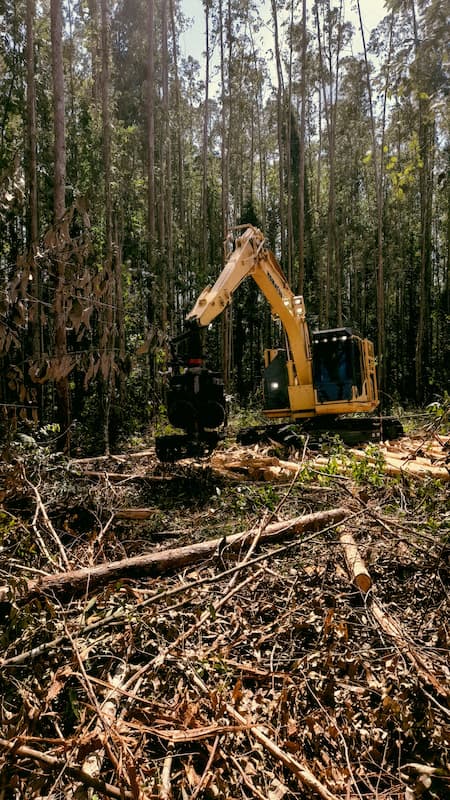
Full Clearing vs. Selective Clearing
Full clearing makes sense when most of the vegetation is standing in the way of the property’s next use. Selective clearing is different. We identify the trees and areas worth keeping and remove the growth that is preventing access, visibility, construction, or usable space.
If you have good shade trees, a wooded property line, mature trees away from the work area, or sections you simply want left alone, there is no reason to treat the entire property as one clearing zone.
When Forestry Mulching Makes Sense
Forestry mulching can be a practical option when the main problem is dense brush, saplings, vines, smaller woody growth, and vegetation covering the ground. Instead of loading all of that material out, the vegetation can be processed into smaller organic material and left across the cleared area.
I look at mulching when the goal is to open acreage, improve access, reclaim overgrown ground, or create usable space without needing every root and stump completely removed.
It is not automatically the right method for a future building pad, driveway, or area where remaining stumps and roots would interfere with the next stage of the project.
When More Complete Clearing Is Needed
Sometimes cutting or mulching vegetation is only part of the job. If the cleared area is intended for a homesite, driveway, building, or another use where underground material will be in the way, stumps and root balls may need more complete removal.
Larger trees, heavy timber, concentrated stump removal, and debris that needs to be moved or hauled can also push the project toward more complete clearing rather than simple vegetation management.
What Happens to the Trees, Stumps, and Debris?
One of the first things I want settled on a land clearing job is what the finished property is supposed to look like. Cutting vegetation is only one part of the work. Trees, brush, stumps, roots, and other woody material still have to be handled in a way that makes sense for what you plan to do with the land next.
What Happens to Cut Trees and Brush?
Trees and brush do not all need to be handled the same way. Smaller vegetation may be processed differently from larger trunks and heavy woody material, so I look at the amount and type of material before deciding what makes sense for the site.
The intended finish matters too. On some properties, material can remain in a designated area. On others, the owner wants the clearing area opened up with as little loose material left behind as the agreed scope requires.
What Happens to the Stumps and Root Balls?
This is where I separate simple clearing from a property that needs a more complete finish. A stump can sometimes remain when the goal is simply to reclaim wooded acreage or open an area. It becomes a very different issue when that same ground will be used for a driveway, homesite, building area, lawn, or other finished space.
If remaining stumps or major roots will interfere with the next stage of the property, they need to be accounted for in the scope before the clearing starts. That may mean grinding or more complete removal depending on what the site requires.
Can Material Be Mulched, Stacked, or Hauled Away?
Those are three different outcomes, and they can change both the cost and the amount of work involved. Processing suitable vegetation on the property avoids treating every piece of material as something that must leave the site. Stacking larger material keeps it on the property but moves it away from the active clearing area. Haul-off requires loading, transportation, and disposal or processing elsewhere.
I would rather decide that before work begins than leave a property owner looking at a pile of material they did not expect. The clearing scope should say what happens to the material as clearly as it says what vegetation is coming out.
Process suitable vegetation and leave the resulting material on the property where appropriate.
Move logs or woody material to an agreed area instead of removing it from the property.
Include removal of designated material when the project calls for a cleaner finished clearing area.
Can Land Clearing Prepare a Lot for Building?
Yes — land clearing can be the first major step in opening a property for a homesite, driveway, garage, shop, or other building area. But there is an important difference between clearing the land and delivering a finished construction pad.
When a property is being cleared for construction, I want to know where the future work is going before trees start coming out. That helps determine how much vegetation needs to be removed, which trees can stay, and whether stumps or major roots will interfere with the next stage of the project.
Clearing a Homesite, Driveway, or Building Area
Clearing for construction should follow the footprint of the project rather than simply opening a random section of the lot. A homesite may need room for the structure itself, access for equipment, a driveway approach, and enough working space around the future building area.
The same applies to a driveway. Trees and brush directly in the route obviously need attention, but nearby trunks, low growth, and vegetation that restrict equipment access may also affect how much area needs to be opened.
The clearer the future homesite, driveway, or building footprint is, the easier it is to avoid removing trees that could have remained.
When Stumps and Roots Need More Complete Removal
Leaving a stump in an unused wooded section may not matter. Leaving one where a driveway, foundation area, utility route, or finished yard needs to go is a different situation.
For construction-related clearing, I look at whether the remaining stump and root system will physically interfere with what happens next. If it will, the project may need stump grinding or more complete stump and root removal rather than simply cutting the tree close to ground level.
Where they do not interfere with construction, access, or the intended finished use.
Especially where structures, driveways, utilities, or other site work will occupy the cleared ground.
Land Clearing Is Not the Same as Grading
This distinction matters. Land clearing removes or processes the trees, brush, vegetation, and other material that is occupying the site. Grading changes the shape, elevation, slope, or drainage of the ground itself.
A cleared lot can therefore still need additional site work before construction begins. Depending on the project, that may include excavation, grading, drainage work, soil preparation, compaction, or other construction-site preparation performed as a separate scope.
- Remove unwanted trees
- Clear brush and vegetation
- Address stumps as required
- Open access and working space
- Change ground elevations
- Shape slopes
- Prepare drainage contours
- Create the final site grade
We define the land clearing scope around what needs to be removed. Any grading or other construction preparation should be confirmed separately for the property.
Can You Clear Steep, Wet, or Difficult Property?
Difficult property does not automatically mean the land cannot be cleared. It means I need to look more closely at the slope, ground conditions, access, drainage, and obstacles before deciding what approach makes sense.
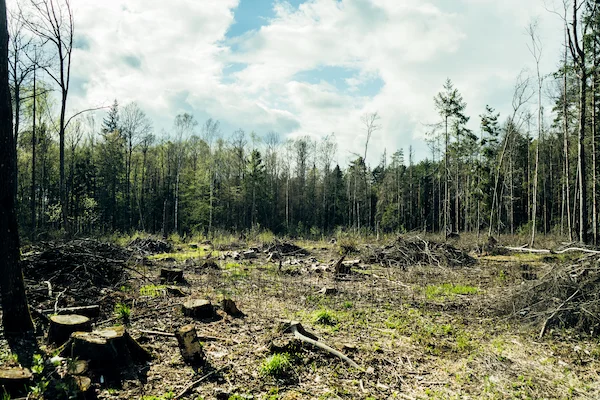
Slopes, Soft Ground, and Uneven Terrain
A slope changes more than the view. It can affect how safely the clearing area can be worked, how material moves across the site, and whether certain parts of the property need to be approached differently from flatter ground.
Soft or saturated soil creates another issue. Even a relatively open property can become difficult when the ground will not support repeated machine traffic without rutting or disturbing the area more than necessary.
Uneven terrain, old drainage channels, hidden depressions, rocks, fallen timber, and changes in elevation all matter when I am figuring out how practical the clearing area really is.
Getting Equipment Into the Clearing Area
Sometimes the hardest part of a clearing job is not the vegetation. It is reaching it. A large open section at the back of a property does not help much if the only way in is blocked by a narrow gate, house, fence, drainage ditch, steep bank, or tight turn.
Before the work starts, I want to know how the clearing area connects to the road or driveway and whether there is enough usable access between the entrance and the work zone.
Creeks, Wet Areas, and Other Site Constraints
Creeks, drainage areas, low ground, and consistently wet sections need more attention than ordinary dry acreage. I do not treat water on a property as something to simply push through and deal with afterward.
The location of the wet area, what needs to be cleared around it, and how the property drains can affect both access and the amount of disturbance that makes sense.
Properties involving waterways, drainage features, or other sensitive areas may also have requirements that need to be checked before land disturbance begins. We cover that separately in the permit section below.
How Long Does Land Clearing Take?
It depends on how much land needs to be opened, how dense the vegetation is, what has to happen to the trees and stumps, and how easily the clearing area can be worked.
Limited acreage, lighter vegetation, good access, and a simpler cleanup scope usually mean less time on the property.
Dense brush, multiple trees, stump work, restricted access, or material that has to be moved can extend the job.
Multiple acres, heavy timber, uneven terrain, wet ground, and more complete site cleanup require a longer working window.
What Determines the Clearing Timeline
Acreage matters, but I would never estimate the schedule from acreage alone. One open acre and one heavily wooded acre can be completely different jobs.
More ground generally means more cutting, machine movement, and material to handle.
Scattered brush moves much faster than tangled vines, dense saplings, mature trees, and heavy woody growth.
Larger trees take more work to remove and create more material that has to be processed or moved afterward.
Clearing vegetation above ground is faster than a project that also requires substantial stump or root work.
Easy access keeps the work moving. Tight entrances, long access routes, fences, structures, or steep approaches can slow it down.
Mulching material on site is a different timeline from stacking, loading, hauling, or leaving a more completely cleared area.
How Weather and Ground Conditions Can Affect the Job
Rain itself is not always the main issue. What matters is what that rain does to the ground where the clearing has to happen.
After enough rain, soft ground can lose the firmness needed for efficient machine traffic. Low areas can hold water, slopes can become harder to work, and repeated passes across saturated soil can create rutting that the property owner did not ask for.
That is why I look at the condition of the property, not just whether rain is falling that morning. Sometimes the better decision is to let a difficult section firm up before continuing rather than force the work and leave unnecessary damage behind.
Reduced ground support can limit where equipment should travel.
Low areas and poor drainage can temporarily restrict part of the clearing zone.
Wet slopes may need different timing than dry, firm sections of the same property.
Do I Need a Permit to Clear Land in Spartanburg?
Maybe. The answer depends on where the property is located, how much ground will actually be disturbed, whether the clearing is connected to future construction, and whether the site includes conditions such as floodplain, drainage, or waterway concerns.
The permitting question becomes more important when clearing includes grubbing, stump and root removal, grading, excavation, or other work that changes the ground surface.
City zoning, site grading, planning, stormwater, and tree removal requirements may apply depending on the property and the scope of the clearing project.
Properties outside the City can fall under Spartanburg County’s land disturbance and stormwater permitting process, with requirements changing according to the type and amount of disturbance.
Spartanburg City and Spartanburg County Requirements
I would not tell a property owner that every clearing project needs the same permit. The important questions are how much ground will actually be disturbed, whether soil will be exposed, whether the work is part of a larger development project, and what conditions are present on the site.
Spartanburg County defines land-disturbing activity broadly enough to include clearing or vegetation removal that disturbs soil, along with stripping, grading, grubbing, excavation, filling, logging, and material storage. Clearing can be treated differently when the soil is not exposed, adequate vegetative structure remains, and the work is not being performed in preparation for later grubbing or grading.
Spartanburg County’s current process identifies a variance form for qualifying land disturbance below 5,000 square feet.
The County provides a Less Than One Acre land disturbance permit process for applicable projects rather than treating every project below one acre as automatically exempt.
Clearing, grading, or excavation disturbing one acre or more can trigger NPDES construction stormwater requirements, including certain smaller sites that are part of a larger common plan.
The City of Spartanburg has its own planning and permitting requirements, including site grading and tree removal procedures. A property inside city limits should therefore be checked against City requirements rather than assuming the County process applies.
Land Disturbance, Waterways, and Sensitive Areas
Acreage is not the only thing I look at. A clearing area near a creek, drainage feature, floodplain, or another sensitive part of the property can require more attention before the work begins.
Spartanburg County’s permitting process specifically calls for additional review when a project is located within a floodplain. Waterways, drainage conditions, and other regulated areas can also affect what needs to be checked before land disturbance starts.
The disturbed area can matter more than the total acreage of the property.
Cutting vegetation and grubbing or excavating the ground are not necessarily treated as the same scope.
Clearing tied to a homesite, driveway, subdivision, or other development can change the permitting picture.
Creeks, drainage areas, floodplain, and other sensitive site features may require additional review.
Any permits, approvals, or site-specific requirements should be confirmed for the property and project before work starts.
How Our Land Clearing Process Works
A good land clearing job starts before anything is cut. I want to understand what you are trying to accomplish, what needs to disappear, what needs to stay, and how the property will be used when the work is finished.
Define What You Want Cleared and What You Want to Keep
I do not start with the assumption that everything on the property should come out. First, we define the area you actually want opened and identify any trees, wooded boundaries, shade, or sections of vegetation you want left alone.
Just as important, I want to know why you are clearing it. Creating usable yard space, opening acreage, preparing a homesite, or making room for a driveway can all require a different level of clearing.
Check Acreage, Trees, Terrain, and Equipment Access
Once the goal is clear, I look at what the property is actually going to require. Acreage tells me the size of the work area, but the trees, brush density, terrain, ground conditions, and access tell me how involved the job will be.
A wide open entrance and firm ground can make a project much more straightforward. Narrow access, steep sections, wet areas, dense timber, large stumps, fences, buildings, or drainage features can change the approach.
Clear the Property for Its Intended Next Use
This is where the plan becomes the actual clearing scope. Trees, brush, saplings, vines, overgrowth, and other unwanted vegetation are addressed according to the area we agreed needs to be opened.
The level of clearing should match what comes next. A section being reclaimed for usable acreage may not need the same finish as a future driveway or building area where stumps and roots could interfere with additional site work.
Decide What Happens to the Remaining Material
Trees and brush do not simply disappear once they are cut. Before the project is finished, the scope needs to account for what happens to logs, brush, mulch, stumps, and other woody material.
Depending on the project, suitable material may be processed on site, larger material may be stacked in an agreed area, or selected debris may need to be hauled away. The important part is deciding the expected finish before the work begins.
Land Clearing for Spartanburg Properties
Around Spartanburg, land clearing can mean opening a wooded lot, reclaiming overgrown residential acreage, creating more usable yard space, or clearing the area needed for a future homesite or driveway. The right approach depends on the property itself — not just the number of acres.
Some properties need only a section opened. Others have dense trees, saplings, vines, and undergrowth covering most of the usable ground. I look at what needs to stay wooded and what is actually preventing the owner from using the lot.
Larger residential tracts often have a mix of open ground, older wooded sections, brush, natural drainage, and areas that have not been maintained for years. Those different sections may need different levels of clearing.
Spartanburg-area properties are not always flat, open ground. Rolling terrain, slopes, low areas, drainage features, and changes in soil conditions can affect access and how a clearing plan should move across the property.
That might mean opening a homesite, making room for a driveway, expanding usable yard space, reclaiming overgrown acreage, or simply making part of the property accessible again.
Land Clearing FAQ
Most land clearing questions come back to the same thing: what is on your property now, what needs to change, and what you want the ground used for afterward. These are a few practical questions that are worth answering before we look at the job.
A property location, a general idea of the area you want cleared, and what you want to accomplish with the land are enough to start the conversation.
01
Should Property Lines Be Marked Before Land Clearing?
If the clearing area is close to a property boundary, I want that boundary clearly understood before work begins. Existing pins, fencing, survey information, or clearly marked limits can help, but if the exact property line is uncertain, the owner may need to have it properly located rather than guessing where the clearing should stop.
02
Do Underground Utilities Need to Be Located Before Clearing?
Underground utilities matter whenever the clearing scope can affect the ground. Utility routes should be identified as required before digging, grubbing, stump removal, or other work that could reach below the surface. Private lines can require separate attention because they may not be covered by ordinary public utility marking.
03
Can I Clear My Property in Stages?
Yes, a larger property does not always have to be cleared all at once. You may want to open the homesite or driveway first and deal with additional acreage later. If that is the plan, I would rather know it at the beginning so the first phase does not create access problems or unnecessary work for the next one.
04
Can Land Clearing Reopen an Old Drive, Trail, or Access Area?
Over time, brush, saplings, vines, fallen limbs, and new tree growth can take over areas that were once usable. If the old route can still be identified and the property conditions allow access, clearing can sometimes reopen that corridor without clearing the surrounding acreage.
05
What If I Do Not Know Exactly How Many Acres Need Clearing?
That is not a problem. Give us the property location and describe the section you are trying to open. The important thing at the beginning is understanding the work area and your goal. Exact acreage can be worked out as the scope becomes clearer.
Need Land Clearing in Spartanburg, SC?
Tell us what you want cleared, where the property is located, and what you want to use the land for afterward. We can start with the scope of the project and what needs to come out.