
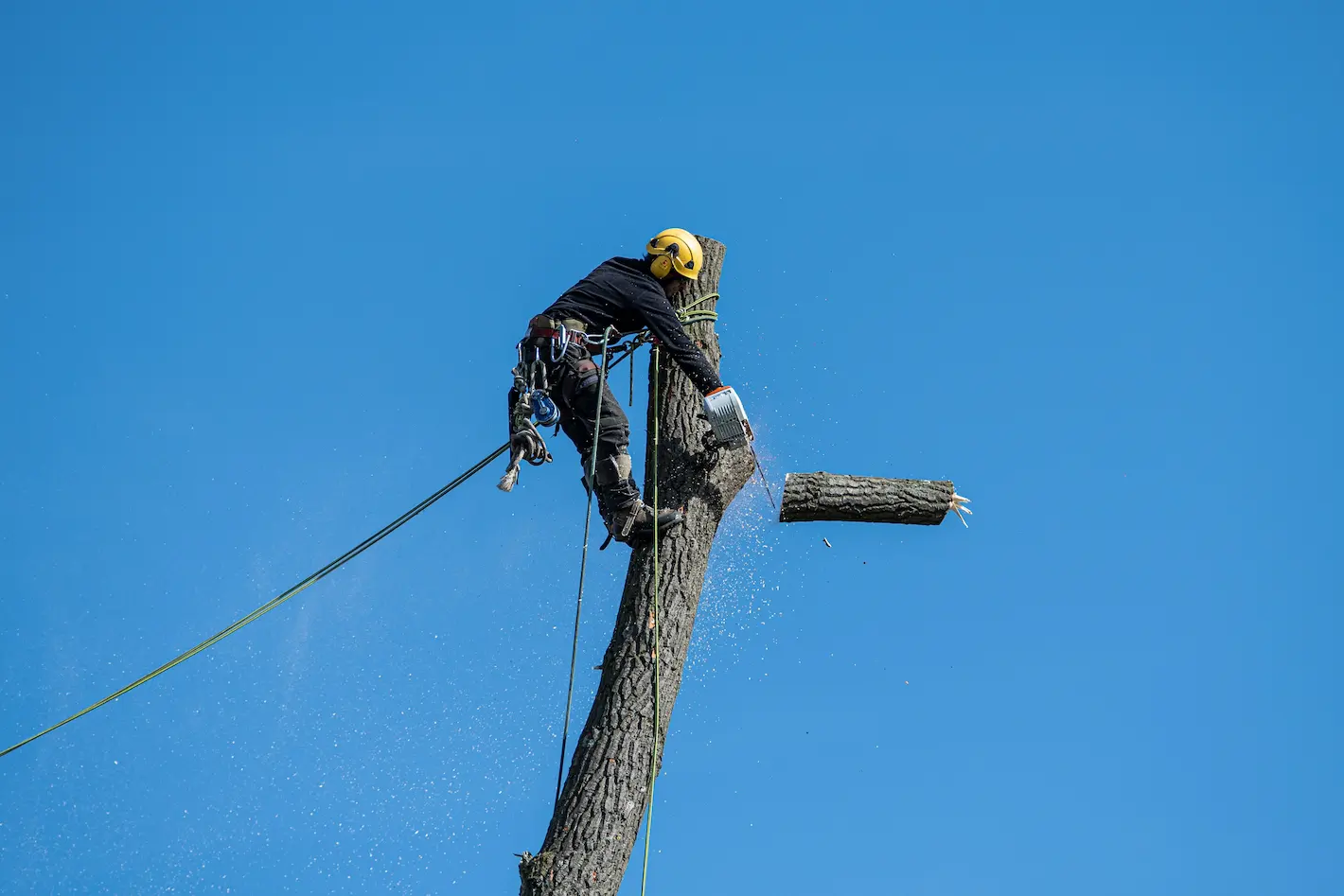
Emergency Tree Removal in Spartanburg, SC
Fallen tree, split trunk, or a tree suddenly leaning toward your home? Request an estimate for urgent tree removal in Spartanburg, SC.
When Is Tree Removal an Emergency?
When you show me a tree after a storm or sudden failure, I am not just looking at whether the tree is damaged. I want to know what changed, what is still holding the tree up, and what could be hit if it moves again. A tree becomes an emergency when the situation is unstable, something important is already blocked or damaged, or the tree could fail into an area people need to use.
A Tree Has Fallen on a House, Vehicle, or Other Structure
If a tree is lying on your house, garage, vehicle, fence, or shed, I do not look at it like a normal tree removal. The first thing I want to know is where the weight of the tree is sitting and what will happen when the first section is cut.
A trunk can be supported by the roof, another limb, the ground, or several points at the same time. That matters because once one of those points is released, the tree can roll, drop, or shift. The removal has to be planned around the way the tree is actually loaded, not simply around where we want to make the first cut.
A Tree Is Split, Uprooted, or Suddenly Leaning
What gets my attention is a change that happened suddenly. If the trunk has opened up, roots are lifting out of the ground, soil is heaving around the base, or a tree that was upright yesterday is now leaning, I want that situation looked at before somebody treats it like ordinary yard work.
I also look at what is in the direction of that lean. A damaged tree leaning over an open part of the yard is one situation. The same tree leaning toward your house, driveway, parked vehicles, or another occupied area is a much more urgent problem.
A Fallen Tree Is Blocking a Driveway or Important Access
A tree does not have to land on the house to create an emergency. If a trunk is across your driveway and you cannot safely get a vehicle in or out, that access problem may need to be dealt with quickly.
Before cutting it apart, I want to see whether the trunk is flat on the ground or still suspended, whether heavy limbs are holding part of the tree up, and whether any section is likely to roll when the weight changes. A tree across a driveway can look simple until the first cut releases a section that was carrying more tension than it appeared to be.
I would be just as concerned about a tree that is splitting, pulling out of the ground, or holding a large broken section over a house as I would be about a tree that has already fallen. If the tree is still moving or actively failing, staying away from it is more important than trying to clean up around it.
Tell us what happened, where the tree is, what it is leaning on or toward, and whether it is blocking access to the property.
What Should I Do If a Tree Falls on My Property?
The first thing I tell a homeowner is not to start cutting just because the tree is already down. A fallen tree can still be carrying a lot of weight, and broken limbs, suspended sections, power lines, or a trunk resting against a structure can make the situation change very quickly. Start by keeping people clear and looking at the problem from a safe distance.
Keep People Away From an Unstable Tree
If the tree has just fallen, split, uprooted, or dropped a major section, give it space. I would keep children, pets, vehicles, and anyone who does not need to be there out of the area until we know what is still under tension and what could move.
Do not assume the danger is over because part of the tree is on the ground. I often pay just as much attention to what is still hanging above the fallen section: broken limbs caught in the canopy, partially attached tops, split trunks, or another tree that was pulled or pushed when the first one came down.
What If the Tree Is Touching Power Lines?
If the tree, a limb, a fence, a vehicle, or anything around the fallen tree is touching a power line, I want you to treat that as an electrical emergency first — not as a tree removal job.
Stay away from the line and from anything the line is touching. A line does not have to be sparking or moving to be dangerous. Do not try to pull a branch away, move the tree, or cut wood near the line.
Duke Energy advises treating downed power lines and objects touching them as energized. Contact emergency services and the electric utility before anyone approaches the tree.
Read Duke Energy Safety GuidanceWhat Information Helps Explain the Situation?
When you contact us, I do not need a perfect description of the tree. I need enough information to understand what happened and what the tree is affecting.
Start with the location of the tree, whether anything is underneath it, and whether the situation is still changing.
Does a Storm-Damaged Tree Need to Be Removed?
Not every tree that loses limbs in a storm needs to come down. What I care about is whether the main structure of the tree is still sound. I look at the trunk, the root system, the amount of crown that was lost, and whether the remaining tree can stand safely where it is. A broken branch is one problem. A failing trunk or root system is a very different problem.
Broken Trunks and Major Structural Damage
If the main trunk has split, a large leader has torn away, or the storm has opened a major crack through the trunk, I start thinking about the structure that is left — not just the wood that already fell.
A tree can still be standing after a storm and have lost a major part of the structure that was keeping it stable. What matters to me is the location and depth of the damage, how much of the trunk is still connected, and what the remaining tree could hit if another section fails.
Uprooted Trees and Root Plate Failure
When I see the ground lifted around the base of the tree, exposed roots, or a root plate that has started pulling out of the soil, that changes the situation immediately. The problem is no longer only in the canopy — the tree is losing the support that holds the entire structure upright.
A partially uprooted tree can sometimes stay standing for a while, but I do not take that as proof that it has stabilized. I want to know how much of the root plate moved, how far the tree has shifted, and what is in the direction it would fall if the remaining roots continue to fail.
Soil lifting or cracking around the base
Fresh roots exposed above ground
A sudden lean that appeared after the storm
When the Damage Is Limited to Branches
If the storm broke one or several branches but the trunk is still sound, the roots have not moved, and the tree has not developed a new lean, I would not automatically tell you the whole tree has to come down.
I want to see how large the broken limbs were, where they tore away, how much of the crown was lost, and whether the remaining canopy is still balanced. Sometimes the real job is dealing with damaged branches and making sure there is not another broken section hanging above the property.
If the trunk and root system are still stable, removing the entire tree may not be the right answer. The decision should be based on what actually failed and what structure remains.
We can start with the condition of the trunk, roots, lean, and surrounding property.
How Much Does Emergency Tree Removal Cost in Spartanburg, SC?
If you ask me what an emergency tree removal will cost before I have seen the tree, I can give you a useful range, but I cannot give you an honest final number from the tree size alone. A tree lying flat in an open yard is one job. The same size tree resting on a roof, suspended over a fence, or loaded against another tree is a completely different removal.
Typical Emergency Tree Removal Price Ranges
These are practical starting ranges for Spartanburg and the Upstate, not fixed quotes. Large, unstable, or structure-involved removals can go above them.
Tree is already down with usable access and no house, vehicle, utility line, or other structure underneath it.
Tree or major sections are resting on a house, garage, fence, shed, vehicle, deck, or another part of the property that has to be protected during removal.
Large tree, difficult access, unstable sections, significant structure involvement, or a removal that requires extensive rigging or lifting.
These ranges are for budgeting only. The actual estimate depends on the tree, the way it failed, what is underneath it, site access, and the removal method required. Stump work is a separate scope unless it is specifically included in the estimate.
What Makes an Emergency Removal More Expensive?
The expensive part of an emergency removal is usually not simply cutting the tree into pieces. It is controlling those pieces when the tree is already broken, loaded, leaning, or resting somewhere we cannot afford to let it move.
If I can work around a tree in an open yard with a clear drop zone, the job is usually more straightforward. If every section has to be supported, lowered, lifted, or removed in a particular order because a roof, fence, vehicle, or another tree is underneath it, the amount of control required goes up — and so does the cost.
- Tree already settled on the ground
- Clear access to the work area
- No structure underneath
- Room to process the wood
- Tree resting on a structure
- Suspended or unstable sections
- Tight access or limited work area
- More rigging or lifting required
Tree Size, Structures, Access, and Job Complexity
When I am working out what an emergency removal is likely to cost, these are the details that change the job the most.
Bigger trunks and heavier sections take longer to control, process, and move. Height matters, but the weight and diameter of the wood matter just as much once the tree is down.
A tree lying in grass gives us options. A tree lying on a roof, garage, fence, deck, or vehicle usually requires much more control over every section that comes off.
I look at whether equipment can reach the tree, whether gates or buildings restrict the work area, and how far the wood has to be moved once it is cut.
Split trunks, suspended limbs, trees caught in other trees, and sections under compression or tension change where cuts can safely be made and how the tree has to be dismantled.
Two 60-foot trees can have completely different removal costs. If one is lying in an open backyard and the other is split across a roof with sections still suspended, they are not the same job. The condition of the tree and what surrounds it can matter as much as the size.
Our separate cost guide covers planned tree removal pricing and the main factors that affect a standard removal estimate in Spartanburg.
Tell us whether the tree is standing, fallen, on a structure, or blocking access and we can start with the details that matter.
What Makes Emergency Tree Removal More Difficult?
When I look at an emergency removal, I am not only looking at how big the tree is. I am looking at where the weight is sitting, what is still attached, what can move when a cut is made, and how much room there is to control the tree. The harder jobs are the ones where the tree can no longer be treated like a normal standing removal.
Trees Resting on Houses, Garages, or Fences
If a tree is lying across a roof, garage, fence, deck, or another structure, I cannot treat the space underneath it like a normal drop zone. Every section we remove can change how the rest of the trunk is supported.
Before anything comes apart, I want to understand where the tree is actually carrying its weight. One part may be sitting on the ground while another section is pressing into a roof or suspended over a wall. Once one support point is removed, the remaining tree can settle, roll, or shift.
The tree often has to be reduced in an order that keeps weight and movement under control around the structure.
Split Trunks, Hanging Sections, and Wood Under Tension
This is where an emergency tree can become very unpredictable. A split trunk may still be carrying a huge amount of weight. A broken top can be hanging from fibers that have not completely let go. A limb caught in another tree can look stable until the section supporting it is moved.
I pay close attention to compression and tension in the wood because that tells me how a section may react when it is cut. The important part is not simply making the cut — it is knowing what that cut is likely to release.
Those sections can move differently from a limb that is hanging normally on a healthy standing tree.
Uprooted Trees and Unstable Root Systems
A partially uprooted tree is difficult because the root plate and the trunk are still connected and can move together. If the root mass is lifted out of the ground, the weight of the trunk may be pulling against roots that are still holding on below the surface.
I want to know whether the tree has finished moving or whether the root plate is still shifting. Wet or softened ground can make that harder to judge, especially when a large tree has leaned but has not completely fallen.
That is why the root plate matters during the removal, not only after the tree is already on the ground.
Limited Access Around the Fallen Tree
Even a tree that is completely down can be difficult if it is behind a house, inside a fenced yard, between buildings, or in a place where there is very little room to work around the trunk.
I look at how close we can safely get to the tree, where sections can be processed, and how the wood will have to come out of the property. Tight access does not necessarily make the tree itself more dangerous, but it can remove many of the options that would make the removal straightforward.
Gates, slopes, buildings, fences, landscaping, and nearby structures can all change the removal plan.
The more the tree is suspended, loaded against a structure, tangled, uprooted, or trapped in a tight space, the more important the order of the removal becomes.
Those details help explain the removal situation much better than tree height alone.
What Happens to the Tree After the Immediate Hazard Is Removed?
Getting the dangerous part of the tree under control is only the first part of the job. Once the immediate hazard is down, I look at what is still left on the property: the remaining trunk, large wood, broken limbs, storm debris, and the stump. That is when we define what still needs to be removed and what the cleanup should include.
Removing the Remaining Tree and Large Wood
Sometimes the emergency is only one part of the tree. A broken top may come down while the lower trunk is still standing, or a tree may fall across a structure while part of the trunk and root system remain in place.
Once the dangerous section is controlled, I look at whether the remaining tree can stay safely or whether the rest of it needs to come down. If removal is still needed, the large wood is reduced into sections that can be handled and moved without creating another problem around the property.
- Is any part of the trunk still standing?
- Is the remaining tree still structurally unstable?
- Where can large sections be safely lowered or placed?
- How will the wood be moved out of the work area?
Brush, Limbs, and Storm Debris
Storm damage can spread material over a much larger area than the tree itself. There may be broken limbs in the yard, brush around a driveway, sections caught in other trees, or smaller debris around the main trunk.
I want the cleanup scope to be clear before the job is finished. Removing the immediate hazard and removing every piece of storm debris are not always the same thing. The important part is knowing what wood, limbs, and brush are included so there is no confusion about what will still be left on the property.
Large trunk sections
Broken limbs and brush
Storm debris around the tree
Material that will remain on site
What Happens to the Stump?
Tree removal does not automatically make the stump disappear. If the tree broke above ground, the original stump may still be in place. If the tree uprooted, you may instead be left with a raised root plate, torn roots, and a hole where the root system pulled out of the ground.
I treat that as a separate part of the property cleanup. If you want a normal stump reduced below the surrounding ground level, stump grinding is usually handled after the tree removal work has been completed.
Learn About Stump Grinding in SpartanburgIf the tree pulled out of the ground, the remaining root mass may need a different approach than a stump from a tree that was cut at ground level.
The cleanup scope should be understood before the work is finished, especially after a storm where the tree may be spread across several parts of the property.
That gives us a much clearer picture of the full emergency removal job.
Emergency Tree Removal After Storms in Spartanburg
Around Spartanburg, the tree calls that come after a storm are not all the same. Sometimes it is a large limb across a driveway. Sometimes a tree has pulled out of wet ground. Other times the tree is still standing, but the trunk has split or the canopy is holding broken sections over the house. What I want to know is what the storm changed and whether the tree is still moving toward failure.
High Winds Can Expose Weakness That Was Already in the Tree
Strong wind does not have to knock a tree completely over to create an emergency. I look for fresh trunk splits, large limbs that have torn away, tops that are hanging in the canopy, and trees that have developed a new lean after the storm.
One of the biggest mistakes is looking only at what already hit the ground. I also want to know what is still above the house, driveway, vehicles, or other areas people need to use.
Saturated Ground Can Change How Well a Tree Is Anchored
After extended or heavy rain, I pay close attention to the ground around a leaning tree. If the soil has lifted, cracked, or opened around the base, that tells me the root plate may have moved.
This matters even if the tree has not fallen yet. A large tree can remain partly upright while roots are pulling out of the soil below it. If I see fresh ground movement along with a new lean, I treat that much more seriously than a tree that has always grown at an angle.
Storm Damage Can Be Spread Across More Than One Part of the Tree
After a thunderstorm, I may be looking at more than one failure at the same time: a broken limb in the yard, another limb hung up above it, and a split higher in the canopy that is harder to see from the ground.
That is why I do not judge the whole situation from the largest piece that fell. The tree needs to be looked at from the base through the remaining canopy so we know whether the immediate problem is over or whether more material is still likely to come down.
A lean that appeared during or after the storm
Fresh soil movement or exposed roots at the base
New cracks or separation in the main trunk
Broken sections still hanging in the canopy
A tree now leaning toward a house or driveway
Access blocked by fallen trunks or large limbs
If the trunk, root plate, or remaining canopy has been compromised, another section can still move after the wind and rain have passed. That is why a fresh change in the tree matters more to me than simply seeing leaves and branches on the ground.
A new lean, lifted roots, a split trunk, or hanging sections can help explain how urgent the situation is.
How Emergency Tree Removal Works
When you contact us about an emergency tree, I want to understand the situation before anyone starts thinking about cuts or cleanup. I need to know what happened, what the tree is affecting, what is still unstable, and how the tree can be taken apart without creating a second problem on the property.
Explain What Happened and Where the Tree Is
I do not need you to know the species of the tree or give me an exact height. Start with what happened. Tell me whether the tree fell, split, uprooted, developed a new lean, or dropped a major section during the storm.
Then tell me where it ended up. A tree across an open yard is a different situation from the same tree resting on a roof, blocking a driveway, hanging over a vehicle, or caught in another tree.
- What happened to the tree?
- Where is the tree now?
- What is underneath or around it?
- Is anything still moving or hanging?
Identify the Immediate Hazard
The next thing I want to know is what can still hurt somebody or cause more property damage. I look at the tree itself, but I also look above it, below it, and around it.
A fallen trunk may be stable while a broken top is still hanging overhead. A tree may be down while another tree beside it was pulled off balance. A split trunk may still be carrying weight even though one side has already failed.
Power lines or utility involvement
Broken sections hanging overhead
Trunks resting against structures
Root plates or trunks still moving
Determine the Safest Removal Approach
Once I understand where the danger is, I can think about the order of the removal. That order can change completely depending on whether the tree is standing, suspended, uprooted, resting on a structure, or lying in an open area.
I want to remove weight in a way that keeps the remaining tree predictable. If a trunk is loaded against a house or another tree, I do not want the first cut to release the part that is holding everything else in place.
Remove the Tree and Define the Cleanup Scope
After the dangerous sections are controlled, the rest of the tree can be reduced and removed according to the situation on the property. That may include the remaining trunk, large wood, broken limbs, or sections that came down during the storm.
Before I consider the job defined, I also want the cleanup scope to be clear. You should know whether large wood is being removed, what happens to brush and storm debris, and whether the stump is staying in place for separate stump grinding.
Emergency removal should not leave the cleanup scope vague once the immediate danger has been handled.
Emergency tree removal moves quickly when it needs to, but the order of the work still matters.
Start with the tree’s condition, what it is affecting, and whether anything is still unstable.
Emergency Tree Removal Questions
Most emergency tree situations come down to a few practical questions: what needs to happen first, what can safely wait, and how much can be understood before we see the tree in person. These are the questions I would want answered before moving forward.
Can a blocked driveway be opened before the entire tree is removed?
Sometimes, but I would not start by cutting a path through the tree until I know what those cuts will release. If the trunk is flat on the ground and stable, opening access may be straightforward. If the tree is suspended, twisted, or being held up by large limbs, cutting one section can change how the rest of the tree moves.
If driveway access is the immediate problem, tell us that when you request the estimate. It helps us understand what needs to be restored first.
Can photos help explain an emergency tree situation?
Yes. A few clear photos can tell me much more than simply hearing that a “large tree fell.” I want to see the overall tree, where the trunk ended up, what it is resting on, and what is around the work area.
Take those photos only from somewhere safe. I do not want you walking under hanging limbs, approaching an unstable root plate, or moving closer to a power line just to get a better picture.
What if the fallen tree came from a neighboring property?
From the tree-removal side, I still need to look at where the tree is now, what it is resting on, and what has to happen to remove the hazard safely. The physical removal problem does not change just because the trunk crossed a property line.
Who is responsible for the cost, what an insurance policy covers, and what permission may be needed between property owners are separate questions. I would get those details clear rather than making assumptions before the work is authorized.
What if the storm is still active when the tree comes down?
The tree may need urgent attention without the conditions being safe enough to start cutting immediately. High wind, lightning, additional falling limbs, or electrical hazards can change what can safely be done at that moment.
My first concern is keeping people away from the danger area and understanding what is still changing. If utility lines are involved, that electrical hazard needs to be handled through the appropriate emergency and utility channels before tree work begins around the line.
What if several trees were damaged in the same storm?
I would not automatically start with the largest tree. I would start with the tree creating the most immediate hazard. A smaller split tree hanging over the house may need attention before a much larger tree that already fell into an open part of the yard.
Tell us about each damaged tree and what is around it. That makes it easier to separate the urgent problems from the trees that can be handled after the immediate hazards are under control.
Tell us what happened, what changed, and what the tree is affecting. Those three things are enough to start the conversation.
Start with the situation you can see. We can work from there.
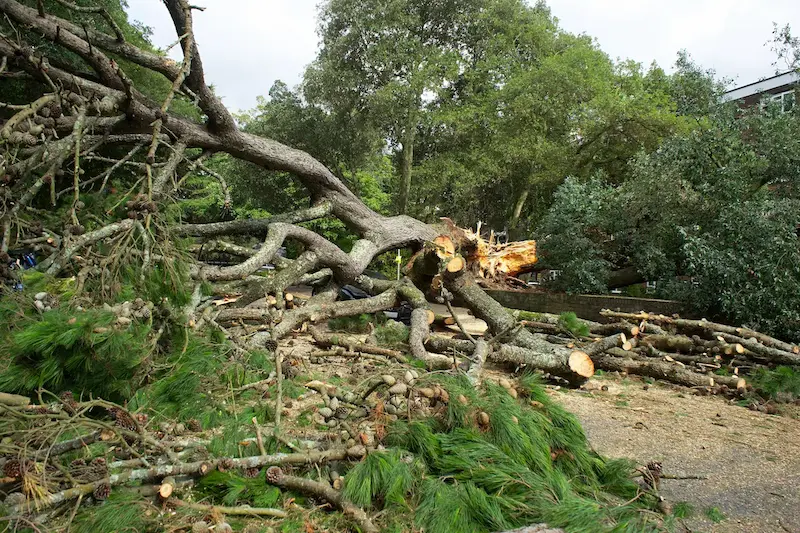
Need Emergency Tree Removal in Spartanburg, SC?
If a tree has fallen, split, uprooted, or suddenly become unstable, tell us what happened and what the tree is affecting. The more we know about where the tree is and what is around it, the better we can understand the removal situation.
Start with what you can see from a safe location. We want to know what changed, where the tree is now, and what could be affected if another section moves.