
Tree Trimming in Spartanburg, SC
Branches getting too close to your roof, driveway, or other parts of the property? We trim selected branches to improve clearance, manage the canopy, and keep the tree when trimming is the right option.
Signs Your Tree May Need Trimming
We usually start by looking at what the branches are doing, where they are growing, and whether they are creating a problem for the tree or the property around it. Not every tree needs heavy or frequent trimming. Sometimes the right job is simply removing a few branches that actually need attention.
Branches That Need Attention
Dead branches are one of the first things we look for. Once a branch is dead, it is no longer contributing to the tree, and removing it can keep that part of the canopy from becoming an ongoing problem.
We also look for branches that are crossing or rubbing against each other. When two limbs keep making contact, they can damage each other over time. In that situation, we look at how both branches are growing and decide which one makes more sense to keep.
Branches growing toward a house, roof, driveway, fence, or other part of the property may also need to be trimmed back. We do not automatically cut everything near a structure. We look at the actual clearance, the direction of growth, the size of the branch, and what is underneath it before deciding what should be removed.
Sometimes One Problem Branch Is Enough
A tree does not always need the whole canopy trimmed. If one limb is rubbing, hanging too low, growing toward the house, or creating a specific clearance issue, we may only need to address that branch or a small part of the canopy.
That is why we look at the tree before deciding how much trimming is needed. Our goal is not to remove as much growth as possible. We want to identify the branches causing the problem, make the cuts that make sense, and leave the rest of the tree alone when it does not need work.
Have Branches That Need a Closer Look?
Tell us what the tree is doing and where the branches are causing a problem. We can look at the tree and determine what trimming makes sense.
Tree Trimming and Pruning for Better Canopy Control
Tree trimming and tree pruning are often used to describe similar work. For us, the important part is not the label — it is why a branch needs to be cut and what we are trying to accomplish with the tree.
Trimming commonly focuses on branches that need clearance, have grown too far in one direction, or are crowding part of the canopy. Pruning is a more selective way of looking at those cuts. We consider branch structure, growth direction, spacing, and which limbs should stay before deciding what needs to come out.
Professional tree trimming does not mean cutting every branch back evenly. We look at the individual tree and make deliberate cuts based on the problem we are trying to solve.
Crown Thinning, Crown Raising, and Crown Reduction
We use different types of cuts depending on where the branches are growing and what needs to change around the tree.
Crown Thinning
Crown thinning means selectively removing branches from inside a crowded canopy. We look for branches that are competing, rubbing, crossing, or adding unnecessary density in one part of the tree.
The goal is not to hollow out the canopy. We remove selected growth while keeping enough healthy branches to maintain the tree’s natural structure.
Crown Raising
Crown raising focuses on selected lower branches. We may use it when limbs are hanging too low over a driveway, walkway, lawn, roofline, or another area where more clearance is needed.
We look at how much lower growth can be removed without taking too much from one part of the tree.
Crown Reduction
Crown reduction is used when certain limbs have extended farther than they should or part of the canopy needs to be brought back.
Instead of cutting the ends off major limbs at random, we choose where to make the reduction cuts so the remaining branches still fit the structure of the tree.
Structural Pruning Is About Choosing the Right Branches
Structural pruning looks at how the main limbs are developing and how they relate to one another. If two branches are competing for the same space, rubbing together, or creating poor growth in one section of the canopy, we decide which branch makes more sense to keep. Sometimes that means removing only one or two limbs rather than trimming the entire tree.
For additional information on proper pruning practices, see the tree pruning guidance from Clemson Cooperative Extension .
Why Tree Topping Is Different
Tree topping generally means cutting major branches back to stubs or removing a large portion of the upper canopy without following the tree’s existing branch structure.
That is different from normal tree trimming. We look for the branches that actually need attention, choose where each cut should be made, and leave healthy growth alone when it does not need to be removed.
In many cases, the right trimming job is smaller than a homeowner expects. A few well-chosen cuts can solve a clearance or branch conflict problem without aggressively cutting back the whole canopy.
Need Help Deciding What Should Be Trimmed?
Tell us what is happening with the tree. We can look at the branches, canopy, clearance, and surrounding property to determine what type of trimming makes sense.
Best Times for Tree Trimming in Spartanburg
There is not one trimming season that fits every tree. When we look at a tree, we consider the species, what needs to be cut, how actively the tree is growing, and what we are trying to accomplish with the canopy.
Some trimming is better planned during a particular part of the year, while a dead branch or a specific clearance problem may be addressed at another time when conditions are suitable. We base the timing on the tree and the work that actually needs to be done.
Tree Trimming Through the Seasons
The amount and type of work matters as much as the month on the calendar.
A Good Time for Many Planned Pruning Jobs
Winter can be a practical time to trim many deciduous trees because the canopy is easier to see once the leaves are down. We can look more clearly at branch structure, crossing limbs, crowded growth, and the shape of the canopy before deciding what should be removed.
Timing Depends More on the Tree
Spring is when many trees are putting energy into new growth, so we pay more attention to species and the purpose of the trimming. Flowering trees may also be timed differently depending on when they bloom. We do not treat every tree in the yard the same way.
Useful for Targeted Branch and Clearance Work
Summer trimming can make sense when we are dealing with selected branches, low clearance, or growth that has become easier to evaluate once the tree is fully leafed out. We are especially careful about how much live canopy is removed during active growth.
Often a Time to Evaluate the Next Trimming Cycle
Fall can be useful for looking at how the tree has grown through the season and identifying branches that may need attention. Depending on the species and the amount of work needed, we may recommend trimming then or planning the work for a more suitable period.
Some Branches Can Be Addressed When the Need Is Clear
If we are looking at a dead branch, one limb rubbing another, or a specific branch creating a clearance problem, the work may not need to wait for a broad seasonal trimming cycle. We look at the branch, the tree, and the conditions at the property before deciding when the cut should be made.
Tree Species, Growth, and Spartanburg’s Climate
Spartanburg has a long growing season, warm summers, and relatively mild winters. That means trees can put on a lot of growth over the course of a year, especially when they have good soil, moisture, and open space around the canopy.
We also see a mix of mature hardwoods, pines, ornamental trees, and younger landscape trees around residential properties. They do not all respond to trimming the same way or need work on the same schedule.
- Tree species
- Age and size of the tree
- Amount of live canopy being removed
- Growth rate
- Clearance around the property
- Purpose of the trimming
We look at the individual tree first. The right time for light clearance work may be different from the right time for more extensive canopy pruning, and the species can change that decision as well.
Not Sure When Your Tree Should Be Trimmed?
Tell us what you are seeing. We can look at the tree, the branches that need attention, and the type of trimming involved before deciding when the work makes sense.
How Often Trees Need Trimming
We do not put every tree on the same trimming schedule. Some trees grow quickly and need attention sooner, while a large mature tree may go much longer before another round of trimming makes sense.
When we look at a tree, we consider how fast it is growing, what was removed the last time, how the canopy is developing, and whether new branches are starting to create the same clearance or branch conflicts again.
Young, Fast-Growing, and Mature Trees
The stage of the tree and the way it grows usually tell us more than a fixed number of years between trimming jobs.
Early Growth May Need More Frequent Attention
Younger trees can change quickly as new branches develop. We may look more closely at competing limbs, poor branch spacing, or growth that could create structural problems as the tree gets larger.
That does not mean cutting heavily every year. It means watching how the tree develops and making selective cuts when they are actually useful.
Rapid Growth Can Bring Clearance Problems Back Sooner
Trees that put on a lot of growth can send new branches back toward a roof, driveway, walkway, fence, or other part of the property faster than a slower-growing tree.
In those cases, we look at where the new growth is going instead of automatically repeating the same trimming pattern every visit.
Large Mature Trees May Need Less Frequent Trimming
A mature tree with a stable canopy may not need frequent work. We usually focus on specific limbs, dead growth, branch conflicts, or clearance issues rather than trimming a large tree simply because a certain amount of time has passed.
The larger the tree, the more important it is to have a clear reason for the cuts we make.
Signs It Is Time to Trim Again
We usually recommend looking at the tree again when new growth starts recreating the same problems that were addressed before.
Branches Are Crossing or Rubbing Again
New growth can create fresh branch conflicts inside the canopy. We look at which limbs are competing and whether one should be removed.
Clearance Is Getting Tight Again
Branches may start moving back toward a roof, driveway, walkway, deck, or other part of the property as the tree grows.
Lower Branches Are Getting in the Way
New lower growth can reduce clearance under the tree or interfere with how part of the yard or property is being used.
The Canopy Is Becoming Crowded Again
If one part of the canopy is getting dense, unbalanced, or full of competing growth, it may be time to look at selective trimming again.
Not Sure If It Is Time to Trim Again?
Tell us what has changed since the tree was last trimmed. We can look at the new growth, canopy, clearance, and problem branches to determine whether more trimming makes sense.
Tree Trimming Around Homes, Roofs, and Structures
Branches growing over a roof, driveway, deck, fence, or garage need more planning than branches hanging over an open yard. Before we make a cut, we look at the branch, where its weight is sitting, what is underneath it, and how much room we have to work.
We do not automatically remove every limb that gets close to a house. We look at the actual clearance, the direction of growth, the size of the branch, and whether selective trimming can solve the problem while keeping the rest of the canopy in place.
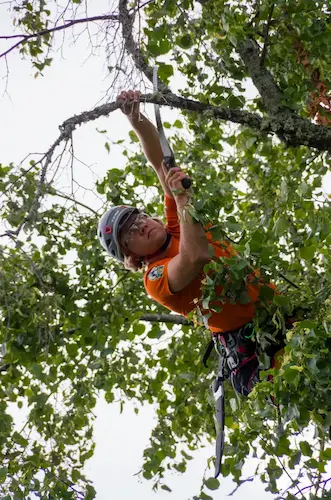
Creating Clearance Around Roofs, Driveways, Decks, and Fences
The amount of clearance we create depends on the branch, the tree, and what is located around it.
Branches Growing Toward the Roof
When branches are touching or moving toward shingles, gutters, or siding, we look at where they can be cut back without taking more canopy than necessary.
Depending on the branch, we may be able to shorten it back to a suitable lateral branch instead of removing the entire limb.
Removing Lower Branches for Clearance
Lower limbs can interfere with vehicles, walking areas, or normal use of the yard. We look at which branches are actually causing the obstruction and how removing them will affect the rest of the canopy.
Working Where the Drop Zone Is Limited
A branch hanging over a deck, fence, garage, landscaping, or another structure often cannot simply be cut and allowed to fall.
We plan where the branch will be cut, how large each section should be, and where the material can go once it comes out of the tree.
Branch diameter, growth direction, tree species, roof position, surrounding structures, and how the property is used all affect how far a branch should be brought back.
Controlling Large Branches Near Structures
A large limb over a roof or another structure may need to come down in several controlled pieces rather than one large section.
We start by looking at where the branch is attached, how far it extends from the trunk, and where most of its weight is concentrated. That tells us a lot about how the limb will react when sections are cut.
We also look at the space underneath. A branch over an open lawn gives us different options than one over a roof, fence, driveway, deck, or landscaped area.
If a branch should not be dropped freely, sections can be controlled or lowered when the job requires it. The method depends on the size and position of the limb and the available work area.
We Check What Is Under the Branch
Roofs, gutters, fences, decks, vehicles, landscaping, and other obstacles affect how we plan the cut.
We Plan the Size of Each Section
Large limbs may be shortened in smaller sections so the material is easier to control around the structure.
We Control Where the Material Goes
When there is not a suitable drop zone, branch sections may need to be lowered or otherwise controlled instead of falling freely.
We Clear the Work Area as We Go
Cut material is moved away from the active work area so the crew can continue working around the tree and property.
Backyard Access Can Change the Trimming Plan
Residential properties around Spartanburg can have very different work areas. Some trees have open ground around them, while others sit behind narrow gates, fences, houses, landscaped areas, or on sloped Piedmont terrain.
We look at how our crew and equipment can reach the tree before deciding how the branches will be handled. Limited access does not automatically mean the tree cannot be trimmed, but it can change how sections are cut, controlled, and moved out of the yard.
Branches Too Close to Your Home or Property?
Tell us where the branches are growing and what is underneath them. We can look at the tree, the available clearance, and the work area before deciding how the trimming should be handled.
Managing How Much of the Canopy Is Removed
Good tree trimming is not about taking off as many branches as possible. Before we start cutting, we look at the whole canopy, which limbs are actually causing the problem, and how the tree will be left once those branches are gone.
We also look at where the cuts are concentrated. Removing several branches from one side of a tree can have a very different effect than making a few selective cuts throughout the canopy. The goal is to solve the trimming problem without taking healthy growth that does not need to come off.
Avoiding Over-Pruning and Excessive Canopy Removal
We decide how much to trim by looking at the individual tree, not by applying the same amount of cutting to every canopy.
Taking too much live growth at one time can leave a tree with less canopy than it needs and can change the way the remaining branches carry the crown. That is why we look at the amount being removed before we start making a long series of cuts.
If the problem is one low limb, one branch over a roof, or a few crossing branches, we may only need to work in that part of the tree. We do not automatically thin the entire canopy just because we are already there.
On a larger trimming job, we step back and compare the canopy as the work progresses. We want to avoid leaving one side unnecessarily light while the opposite side remains full.
Tree size, maturity, species, branch condition, the type of trimming being done, and where those branches are located all affect how much work makes sense. A light clearance job and a larger canopy reduction are not the same kind of trimming.
What Happens After Branches Are Removed
The tree keeps growing after a trimming job, so we think about the next growth cycle when we decide what to cut today.
Branches Do Not Simply Grow Back the Same Way
A branch that is properly removed does not return as the exact same limb. The tree can continue producing new growth elsewhere, and some areas may respond more strongly than others depending on how much was cut.
Heavy Cutting Can Create More Growth to Manage
When too much canopy is removed, a tree may respond with a lot of new shoots around cut areas. That can create another trimming problem later instead of solving the original one cleanly.
Selective Trimming Can Improve the Canopy
Removing dead, rubbing, poorly positioned, or obstructive branches can improve how the remaining canopy is arranged and can create the clearance the property needs without stripping healthy growth.
More Extensive Work May Need a Different Approach
If solving the problem would require taking a very large portion of the live canopy at once, we look carefully at whether that amount of trimming makes sense or whether the work should be approached differently.
Tree Topping Removes More Than the Problem Branches
We already separate normal tree trimming from topping because they are not the same type of work. In this part of the job, the important difference is how much canopy is being removed and where the cuts are made.
Instead of cutting major limbs back simply to make the tree much smaller, we focus on the branches that have a reason to come out. That helps us manage clearance, branch conflicts, and canopy size without removing large amounts of healthy growth unnecessarily.
Not Sure How Much of the Tree Should Be Trimmed?
We can look at the entire canopy, the branches causing the problem, and what needs to stay before deciding how much trimming makes sense.
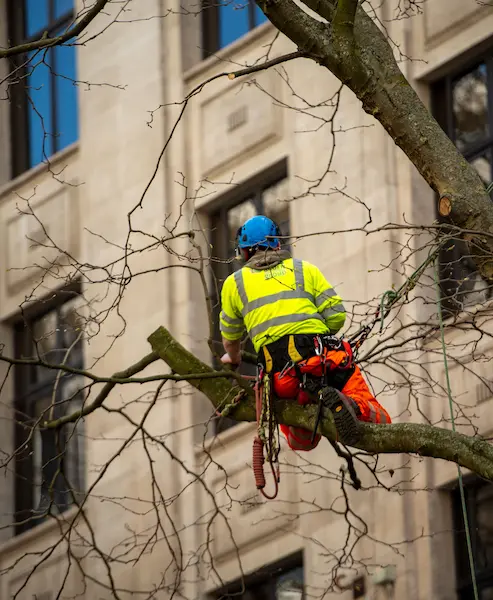
Trimming Large Trees and Difficult Access Areas
A tall tree in an open front yard is a different job from a large tree behind a house, inside a fenced backyard, or growing on ground where equipment cannot be positioned close to the trunk.
Before we decide how to trim it, we look at where the branches are, how our crew can reach them, what space is available below the canopy, and how the cut material can be brought down and moved out of the property.
Climbing, Aerial Access, and Rigging
The right way to reach a branch depends on the tree, the property, and where the work is located inside the canopy.
When Direct Equipment Access Is Limited
Some branches cannot be reached from a practical equipment position. In those situations, climbing may be part of the approach so the work can be reached from inside the tree.
We still look at the branch path, the area underneath, and how the material will come out of the canopy before cutting begins.
When the Property Allows Equipment to Get Close Enough
Where access, ground conditions, and tree position allow it, aerial equipment can provide another way to reach high or outward-growing branches.
The equipment still has to be positioned where the work can be reached without creating a poor setup elsewhere on the property.
When Branches Need to Be Controlled on the Way Down
A high limb may be too large, too long, or too poorly positioned to drop freely. When the job calls for it, sections can be supported, lowered, or redirected as they are removed.
That gives us more control over where the material travels between the canopy and the ground.
Large Branches Often Come Down in Sections
A long branch can carry a lot of weight far away from the trunk. Cutting the entire limb at once is not always the right way to handle it.
We may shorten the branch progressively, working from the outer portion toward the main attachment. Smaller sections are easier to control, especially when the branch is high in the canopy or there is limited open ground below.
We check its length, diameter, attachment, weight distribution, and what sits underneath it.
The branch can be divided into smaller pieces instead of treating the entire limb as one cut.
Sections that should not fall freely can be handled differently depending on the space and setup below.
Once material reaches the ground, it has to be moved so work can continue through the rest of the canopy.
Narrow Access, Slopes, and Soft Ground
Getting to the tree can be just as important as reaching the branch.
Narrow Gates and Fenced Backyards
A tree may be easy to see from the street but difficult to reach once fences, gates, houses, sheds, or other structures limit the path into the yard.
Sloped Ground
Sloping ground can change where a crew or piece of equipment can reasonably be positioned and how material is moved once it reaches the ground.
Soft or Wet Ground
Ground conditions matter when access depends on bringing equipment across a yard. Soft areas may reduce the locations that make sense for positioning and movement.
Long Carry-Out Distance
When branches have to travel from a backyard to a driveway or roadside loading area, the distance and path out of the property become part of the job.
The Tree Is Only Part of the Job
Properties around Spartanburg and the surrounding Upstate can vary from open residential lots to tighter backyards with fences, slopes, mature trees, and limited paths between the street and the work area.
That is why we look at the entire site before deciding how a large tree should be trimmed. Height matters, but access, ground conditions, branch position, and the route for moving material can change the work just as much.
Have a Large Tree or Difficult Backyard Access?
Tell us where the tree is located and what makes the access difficult. We can look at the height, branches, ground conditions, and available work area before deciding how the trimming should be approached.
Tree Trimming Cost in Spartanburg, SC
Tree trimming prices can vary quite a bit because two trees of the same height can require completely different amounts of work. Access, branch size, canopy spread, structures underneath, and how the branches need to be handled all affect the job.
The ranges below are useful for getting a general idea of cost before requesting an estimate. They are not fixed quotes, and the actual price depends on the tree and the work needed at the property.
Typical Tree Trimming Price Ranges
Tree size gives you a starting point, but the difficulty of reaching and handling the branches can move the final price up or down.
Smaller trees with accessible branches, open working space, and a limited amount of trimming.
More canopy to work through, larger branches, greater height, or moderate clearance and access considerations.
Taller trees with larger limbs, wider canopies, more involved access, or branches that require additional control.
Very large trees, difficult backyards, extensive canopy work, limited equipment access, or branches that require more technical handling.
The final cost depends on what we find at the property and exactly which branches need to be trimmed.
What Affects the Cost of Tree Trimming?
We look at more than tree height when pricing a trimming job.
Tree Height and Canopy Size
Taller trees and wider canopies generally mean more branches to inspect, reach, cut, and move.
Number and Diameter of Branches
Removing a few small branches is a different job from working through several heavy limbs spread across the canopy.
Height of the Cuts
Branches higher in the tree may require a different setup and more time to reach than work close to the ground.
Structures Under the Canopy
Roofs, garages, fences, decks, driveways, vehicles, and landscaping can reduce the available drop zone and change how branches are handled.
Backyard and Equipment Access
Narrow gates, fenced yards, houses, slopes, or other obstacles can make it harder to get close to the tree and move material out.
Climbing, Aerial Access, or Rigging
Jobs that require more involved access or controlled lowering of branches generally take more setup and labor.
Number of Trees
Several trees completed during the same visit may share some of the setup and mobilization involved in getting the work started.
Cleanup and Hauling
The amount of branches and debris produced affects how much material has to be handled and removed from the work area.
Why Two Similar-Sized Trees Can Cost Different Amounts
Tree height matters, but the working conditions around the tree can change the job just as much.
- Approximately 50 feet tall
- Open front yard
- Clear working area underneath
- Equipment can get reasonably close
- Branches can be handled with fewer access limitations
- Approximately 50 feet tall
- Fenced backyard
- Large limbs extending over a roof
- Limited direct equipment access
- Branches need more control during removal
Both trees may be about the same height, but Tree B can take more time, setup, and branch control. That is why height alone does not determine the price of a tree trimming job.
Trimming Several Trees During the Same Visit
If several trees need work, completing them during the same visit can sometimes make the overall job more efficient because the crew and equipment are already at the property.
That does not mean every additional tree receives a fixed discount. Tree size, access, and the amount of trimming required still determine how much work each tree adds.
Confirm What Cleanup Is Included in the Estimate
Trimming can produce anything from a small pile of branches to a large amount of material from several mature trees.
Cleanup and hauling should be confirmed in the estimate because the amount of debris and the requested scope can affect the final price.
Want a Price for Your Tree?
Tell us how many trees need trimming, their approximate size, where they are located, and which branches are causing the problem. We can use that information to start evaluating the job.
How Our Tree Trimming Process Works
A tree trimming job starts before the first branch is cut. We look at the tree, the branches that need attention, what is underneath the canopy, and how the work area can be organized around the property.
That gives us a plan for which branches should come out, how they can be handled, and how the cut material can be moved out of the active work area as the job progresses.
From the First Look to the Final Cut
We work through the tree in a planned sequence rather than deciding on each branch only after we reach it.
We Walk the Tree and the Area Around It
We start from the ground and look at the overall canopy, the branches causing the problem, nearby structures, access points, and the space available underneath the tree.
We Decide Which Branches Actually Need to Come Out
We identify the branches creating clearance problems, rubbing or crossing inside the canopy, hanging too low, or otherwise needing attention. Healthy branches without a reason to be removed do not automatically become part of the job.
We Organize the Area Below the Canopy
Driveways, walkways, fences, roofs, vehicles, landscaping, patio furniture, and access routes all affect where the crew can work and where cut material can be brought down.
We Plan How Each Larger Branch Will Come Down
Some branches have open space underneath and can be handled simply. Others may need to be cut into smaller sections or controlled as they come out of the canopy.
We Work Through the Canopy Progressively
As branches are removed, we continue looking at the remaining canopy. That helps us avoid taking more live growth than the job requires or leaving one part of the tree unnecessarily light.
Cut Branches Are Moved Out of the Active Work Area
Material that reaches the ground has to be moved away from the tree so the crew can continue working and keep the access route usable. The exact cleanup and hauling scope should be confirmed in the estimate.
What to Expect on the Day of the Job
The amount of time and preparation depends on the tree, the access, and how much trimming is being done.
How Long the Work Takes
A smaller accessible tree with a few selected branches can take far less time than a large canopy that requires climbing, difficult access, or controlled branch work. We base the job length on the actual scope rather than one standard time per tree.
Whether You Need to Be Home
That can depend on property access and what has been arranged before the work begins. Gates, locked areas, pets, or anything else that affects access should be discussed ahead of the job.
Vehicles and Items Near the Tree
Vehicles, trailers, patio furniture, toys, or other movable items may need to be relocated when they sit inside the work area or along the route used to move branches out.
Cleanup and Hauling
Tree trimming can produce a significant amount of branches and smaller debris. The amount of cleanup and hauling requested should be included clearly in the estimate so the scope is understood before work begins.
A Clear Work Area Helps the Job Move More Efficiently
Most preparation is simple. The important part is making sure we know about anything that affects access to the tree or the area underneath it.
Keep gates and the planned access path available when possible.
Move vehicles from the immediate work area if requested before the job.
Move loose patio furniture or other movable items beneath the canopy when they could interfere with the work area.
Point out narrow gates, locked areas, slopes, or other access restrictions when requesting the estimate.
Tell Us What You See From the Ground
You do not need to diagnose the tree before contacting us. A few basic details can help us understand what you need: how many trees are involved, their approximate size, where they are located, and which branches are causing concern.
It also helps to mention branches over a roof or driveway, backyard access, fences, narrow gates, or anything else that could affect how we reach the tree.
Have Branches That Need Attention?
Tell us what is happening with the tree and where it is located on the property. We can start with the branches, access, and work area before determining the trimming approach.
When Trimming Is No Longer the Right Solution
If a problem is limited to a few branches, trimming may be all the tree needs. But there are situations where removing more and more of the canopy stops being a reasonable way to solve the problem.
We look at how much of the tree would need to be cut, what would remain afterward, and whether the trimming would actually solve the issue or only postpone it.
When Selective Trimming Can Still Solve the Problem
One problem branch does not automatically mean the whole tree needs to come down.
If the issue is limited to a few limbs, we would rather deal with those branches than remove more of the tree than necessary.
Low branches, limbs approaching a roof, crossing branches, or selected growth creating clearance problems can often be addressed while leaving most of the canopy in place.
Before recommending more extensive work, we look at whether selective cuts can solve the problem without leaving the tree unnecessarily thin or unbalanced.
When Removing More Branches Stops Making Sense
There is a point where continuing to cut branches can leave too little useful canopy or fail to address the real problem.
Too Much Live Canopy Would Need to Come Off
If solving the clearance or branch problem requires removing a large portion of the live canopy, we look at whether trimming is still the right approach.
Problems Are Spread Through the Tree
When several major limbs or multiple parts of the canopy are involved, the issue may no longer be limited to one area that can be corrected with selective trimming.
Repeated Trimming Is Not Solving the Same Problem
If the same major clearance or structural issue keeps returning, continuing to remove more branches may only repeat the work without solving the underlying situation.
The Tree Would Be Left Heavily Reduced or Unbalanced
If the work would leave most of the canopy on one side or require excessive reduction just to keep the tree in place, we stop and look at the larger decision.
The Difference Comes Down to What Can Reasonably Stay
A Limited Branch Problem
The concern can be handled by removing or shortening selected branches while leaving a useful, balanced canopy behind.
The Problem Involves Too Much of the Tree
Fixing the issue would require removing so much of the canopy that trimming no longer provides a reasonable long-term solution.
If trimming is no longer enough to address the tree, learn more about our tree removal service in Spartanburg .
We Look at What the Tree Will Be After the Work
We separate the branches that need attention from healthy growth that does not need to be removed.
A few selective cuts are very different from removing a large portion of the live crown.
We look at whether the tree would still have a useful and reasonably balanced canopy after the proposed trimming.
If the same issue is likely to remain even after extensive cutting, more trimming may not be the best answer.
Not Sure Whether the Tree Needs Trimming or More?
You do not need to decide that before contacting us. We can look at the branches, the amount of canopy involved, and what would remain after the work before determining whether trimming still makes sense.
Tree Trimming for Spartanburg Homes and Properties
Tree trimming around Spartanburg is often shaped as much by the property as by the tree itself. Mature trees, fenced backyards, driveways, nearby roofs, slopes, and limited access can all change how a trimming job needs to be planned.
We look at the tree in the context of the property around it. The same branch problem can require a different approach on an open residential lot than it does beside a house with very little working room.
Common Tree Trimming Situations Around Spartanburg
The reasons homeowners call for trimming tend to come back to clearance, branch growth, canopy management, and how the tree fits around the property.
Mature Branches Extending Over the Yard
Large hardwood canopies can spread a long way from the trunk. Selected limbs may need attention when they become too low, crowded, or begin interfering with how the property is used.
High Branches in Pines and Other Tall Trees
Tall trees can place problem branches well above normal ground reach. Height, branch position, and the space underneath all affect how that trimming work is approached.
Growth Moving Back Toward the House
Branches can gradually extend back toward roofs, gutters, driveways, fences, and other parts of a residential property as the canopy continues growing.
Lower Limbs Reducing Everyday Clearance
Lower branches may begin interfering with vehicles, walkways, mowing areas, or normal movement around the yard even when the rest of the tree does not need extensive trimming.
Property Layout Changes How the Work Is Planned
Around Spartanburg and Spartanburg County, the amount of usable space around a tree can vary considerably from one property to the next.
Some homes have open lawns and straightforward access from the driveway. Others have mature trees behind the house, narrow gates, fences, decks, landscaping, or only a small amount of open ground beneath the canopy.
Sloped Piedmont terrain can also affect where work can be staged and how branches are moved once they reach the ground. We take those conditions into account before deciding how the trimming should be organized.
That is especially important on larger trees. The branch itself may be straightforward to cut, but the route to reach it and move the material out can make the overall job much more involved.
More working room can provide additional options for reaching branches and handling material.
Limited access can change how the crew reaches the tree and how cut branches leave the property.
Elevation changes can affect positioning, movement, and the usable work area around the tree.
Nearby roofs, garages, fences, decks, and driveways reduce the amount of open space around the canopy.
From established residential areas in Spartanburg to larger properties farther out in Spartanburg County, we base the trimming plan on the actual tree, the surrounding structures, the available access, and the space we have to work.
Tree Trimming FAQs
These are some of the questions homeowners ask when deciding whether a tree needs trimming, how much work makes sense, and when trimming may no longer be the right solution.
How Often Should Trees Be Trimmed in Spartanburg, SC?
There is no single trimming schedule that works for every tree. Younger or fast-growing trees may need attention more often, while a mature tree with a stable canopy may go several years before another trimming job is useful.
We look at new growth, branch conflicts, clearance, and how the canopy has changed since the last work instead of trimming simply because a certain amount of time has passed.
Can Tree Trimming Improve the Health of a Tree?
Selective trimming can help when dead, rubbing, crossing, or poorly positioned branches are creating problems in the canopy. Removing those branches can improve the way the remaining crown is arranged and reduce unnecessary branch conflicts.
Trimming is not a cure for every tree problem, so we still look at the overall condition of the tree before deciding what should be cut.
Can Too Much Trimming Hurt a Tree?
Yes. Removing too much live canopy at one time can leave the tree with less foliage than it needs and can trigger a strong growth response around some cuts.
That is why we focus on the branches that have a reason to come out rather than removing healthy growth just to make the canopy look smaller.
Will Branches Grow Back After Tree Trimming?
A branch that has been properly removed does not grow back as the exact same limb. The tree can continue producing new shoots and branches in other areas as it grows.
Heavy cutting can sometimes create more vigorous new growth, which is another reason we avoid removing more canopy than the job requires.
Can You Trim Just One Problem Branch?
Sometimes one branch is the entire problem. A low limb over a driveway, a branch approaching the roof, or one crossing limb inside the canopy may be handled without trimming the whole tree.
We still look at how that branch is attached and what removing it will leave behind before making the cut.
When Is a Tree Too Far Gone for Trimming?
Trimming becomes less useful when decline or deteriorating growth is spread through much of the tree, or when solving the problem would require removing a very large portion of the live canopy.
If the tree would be left heavily reduced, unbalanced, or the same major problem would remain after extensive trimming, it may be time to consider tree removal in Spartanburg instead.
Need Tree Trimming in Spartanburg, SC?
Tell us what is happening with your tree, where the problem branches are located, and what you would like cleared or trimmed. Request an estimate for tree trimming in Spartanburg, SC.