
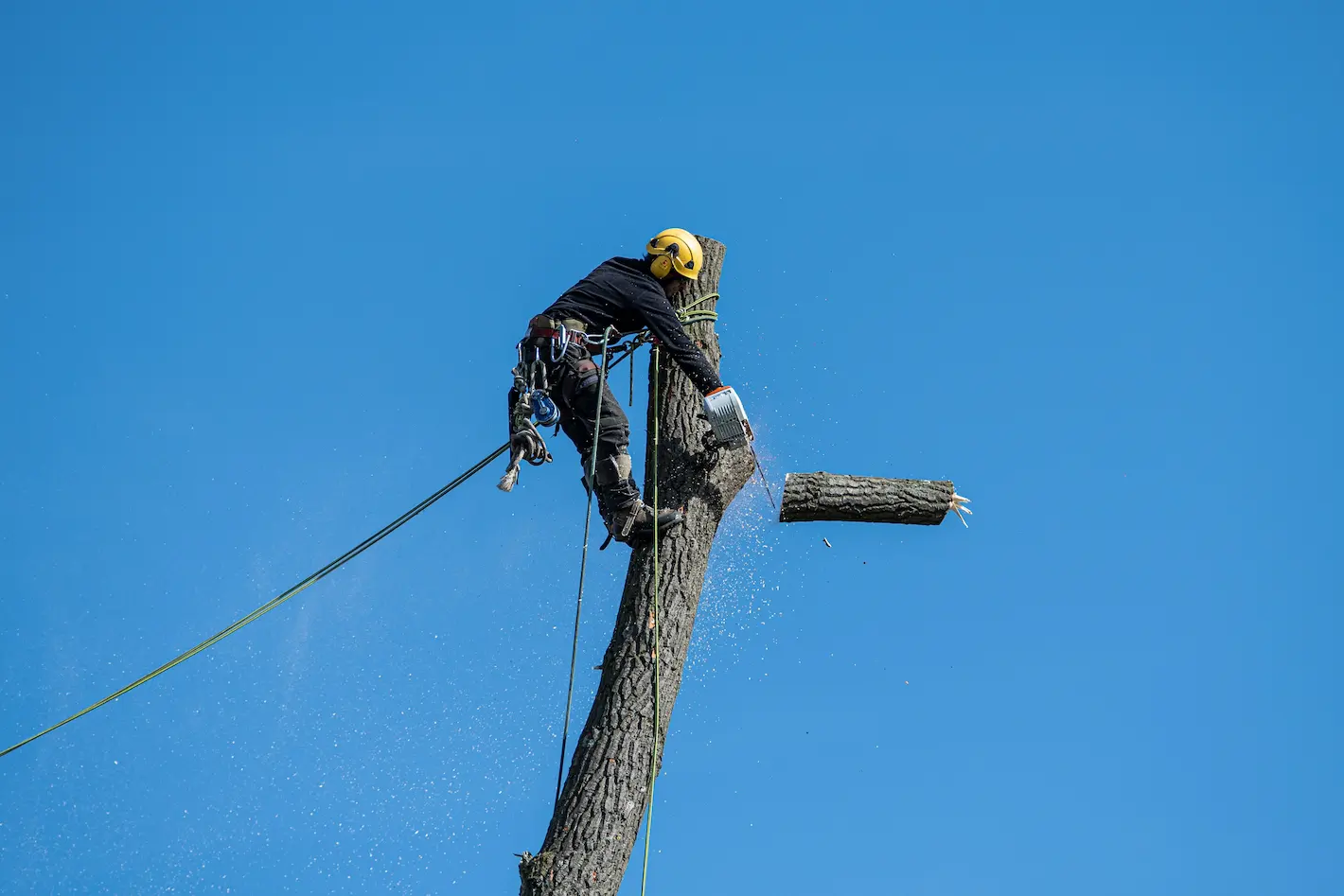
Tree Removal in Spartanburg, SC
Dead, damaged, leaning, or unwanted tree? Request an estimate for tree removal based on the tree’s size, condition, access, and proximity to homes or other structures.
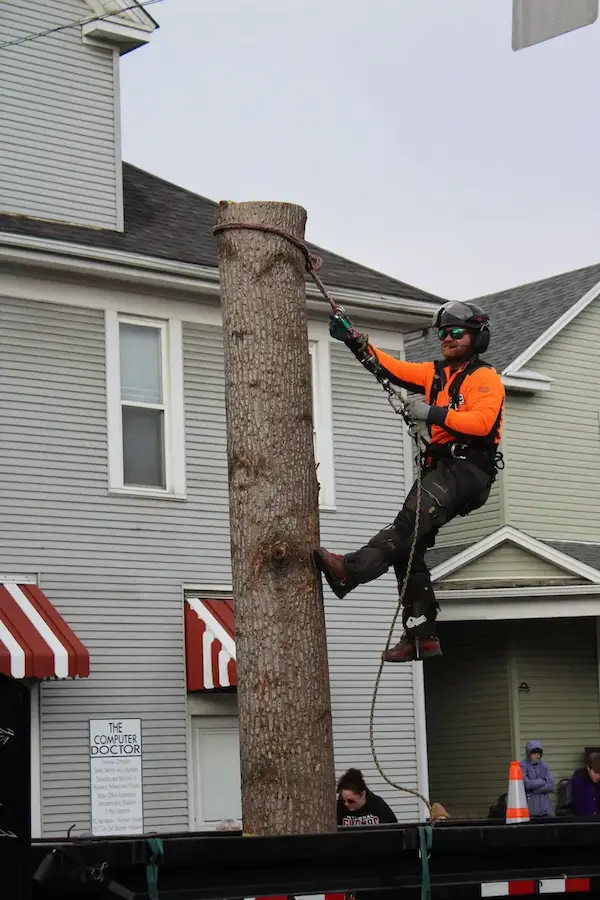
When Does a Tree Need to Be Removed?
Not every leaning, damaged, or unhealthy tree needs to come down. Tree removal becomes the practical choice when the tree has lost too much structural integrity, its root system is failing, major damage has left it unstable, or its location creates a problem that cannot reasonably be avoided.
The Tree Is Dead or Severely Declining
A dead tree cannot recover. That does not mean every dead tree creates the same level of urgency, but its structure can continue to deteriorate over time. As the wood weakens, branches and sections of the trunk can become less predictable. The tree’s location also matters: a dead tree near a home, driveway, walkway, neighboring property, or other frequently used area generally deserves more immediate attention than one standing well away from people and structures.
The Trunk Is Cracked, Split, or Structurally Compromised
Deep trunk cracks, separating stems, major cavities, and substantial decay can weaken the main structure carrying the weight of the tree. The important question is not simply how the trunk looks, but how much sound wood remains to support everything above it.
The Tree Has Started Leaning or the Root Plate Is Moving
A tree that has grown at an angle for years is different from one that recently started leaning. Fresh soil cracks, lifted ground, exposed roots, or movement around the base can indicate that important structural roots have shifted or failed.
Structural Damage Has Left the Tree Compromised
A tree can remain standing even after serious structural damage. A split trunk, partial root failure, major stem damage, or extensive decay can leave the tree with too little sound structure to reliably support its weight. In those situations, removal may become the practical option rather than leaving a compromised tree in place.
The Tree Creates an Unavoidable Property Conflict
Tree removal is not limited to dead or damaged trees. A tree may also need to come down when its location directly conflicts with a structure, access route, construction project, or planned use of the property and there is no practical way to work around it.
What Makes a Tree Removal Difficult or Complex?
When we plan a tree removal, we do not judge the job by height alone. We look at the weight of the tree, the way it is built, the condition of the wood, the room available to work, how our crew and equipment can reach the tree, and how much control will be needed as the tree comes apart.
Tree Size, Weight, and Crown Spread
Height is only the starting point. We also look at trunk diameter, crown width, heavy lateral limbs, and how much weight is carried above the work area. A tall, narrow tree can be a very different removal from a shorter tree with a massive trunk and broad, heavily loaded canopy.
The larger and heavier the sections become, the more important the cutting sequence, rigging plan, landing area, and ground crew coordination become.
Tree Structure and Wood Condition
Before the first cut, we need to know what kind of structure we are working with. Multiple leaders, heavy unions, cavities, cracks, decay, dead sections, and weakened attachment points can all change how the tree should be dismantled.
Sound wood gives us more predictable working and rigging points. Compromised wood requires more conservative decisions because the tree may not tolerate loading or movement the same way a healthy structure would. A dead tree is not automatically harder to remove than a healthy tree, but dead or decayed wood can make the job more complex when limbs, unions, or trunk sections have weakened enough to behave unpredictably under cutting, rigging, or movement.
Access for Our Crew and Equipment
The tree may be easy to see from the street and still be difficult to reach. Narrow gates, tight side yards, slopes, fences, soft ground, retaining walls, and long backyard carries all affect how we organize the removal.
We also have to determine where equipment can be positioned. Depending on the job, that can mean planning around climbing and rigging systems, aerial access equipment, loaders, or crane support. If machines cannot get close to the tree, more of the work has to be performed and moved manually.
Available Drop Zone and Working Room
Open ground gives our crew more options. When there is plenty of usable space, larger sections may be brought down efficiently. When the landing area is small, the removal has to become much more controlled.
That can mean taking smaller pieces, attaching rigging lines, lowering sections instead of allowing them to fall freely, and keeping the ground crew focused on one controlled sequence at a time.
Crew Size, Rigging, and Removal Sequence
A complex removal is a coordinated operation. We have to decide where the climber or aerial operator will work, where the ground crew can safely stand, which sections come off first, where ropes and lowering devices can be set, and how each piece will be moved once it reaches the ground.
Some trees can be removed with a straightforward cutting sequence. Others require sectional dismantling, rigging lines, controlled lowering, multiple ground workers, and equipment positioned around the work zone. The more control the tree requires, the more planning goes into every cut.
We Plan the Entire Work Zone
Removing Trees Near Homes, Roofs, and Other Structures
Removing a tree beside a house is not the same job as removing one in an open field. When branches extend over a roof, the trunk stands close to a building, or fences, garages, decks, and driveways occupy the drop zone, we plan the removal around those structures first. Every cut has to account for where that section will move, where it can be lowered, and what is underneath it.
Can a Tree Be Removed When It Is Close to a House?
Yes. Trees can be removed from tight residential locations, but the closer the tree is to a structure, the less room there is for uncontrolled movement. Before work begins, we look at the trunk position, branch spread, roofline, usable landing space, and the direction each section can travel.
If there is no clear fall path for the whole tree, we do not treat it like an open-ground removal. We dismantle the tree in a sequence that keeps the work inside the space available around the property.
What Happens When Large Limbs Hang Over a Roof?
A heavy limb over a roof cannot simply be cut and allowed to drop. We first look at its weight, balance, attachment point, available rigging positions, and where the piece needs to finish once it is separated from the tree.
Large limbs can be divided into smaller sections and controlled with ropes and lowering systems so our ground crew determines where the material lands instead of letting gravity choose the landing point.
Why Are Trees Near Buildings Often Removed in Sections?
Sectional dismantling gives our crew control over the weight and movement of the tree. Instead of trying to move the entire tree at once, we reduce it progressively—limbs first where appropriate, followed by larger leaders and trunk sections.
The size of each piece depends on the room below, the structure and condition of the tree, available rigging points, and how much weight can be handled within the work zone. Near a house, smaller controlled sections often give us the precision the job requires.
How Do We Protect the Property During Tree Removal?
Before sections start coming down, we establish where people, equipment, ropes, and cut material will move through the property. Roofs, siding, windows, gutters, fences, decks, garages, sheds, driveways, and other fixed features all influence the removal plan.
We also keep the active drop and lowering area controlled. Once a section reaches the ground, it needs a clear route out of the work zone so removed material does not become an obstacle during the next stage of the removal.
When Does Rigging Become Part of the Removal?
Rigging becomes important when a limb or trunk section cannot be allowed to fall freely into the space below. Ropes, lowering devices, friction control, and carefully selected anchor points allow us to slow, redirect, or lower heavy sections into a usable landing area.
The goal is not to make a difficult removal look dramatic. Good tree removal should make the movement of heavy wood controlled and predictable. The more confined the area around the tree, the more important that control becomes.
The Tree Is Only Half the Work Zone
Tell us where the tree is located and what is around it.
Tree Removal in Tight and Limited-Access Areas
Some removals become difficult before our crew ever reaches the trunk. A backyard tree may sit behind a narrow gate, down a long side yard, across soft ground, or in a location where our larger equipment simply cannot get close.
In those situations, we plan the entire route in and out before the first cut. Getting people and equipment to the tree is only half the problem—the branches and trunk sections also have to come back out.
Where trucks, trailers, and equipment can stage without blocking the work route.
Width, overhead clearance, turns, fences, steps, and other restrictions between the street and backyard.
Slopes, wet areas, soft lawns, drainage paths, retaining walls, and stable equipment footing.
The room available for our crew, climbing or aerial access, rigging, lowering, and staging sections.
The route every limb and trunk section follows from the tree back to the loading area.
Can We Remove a Tree From a Backyard With Very Little Access?
Yes. Limited access changes the removal plan—it does not automatically stop the job.
We first determine how our crew can reach the tree, which machines can physically fit through the property, where sections can be landed, and how everything will be moved back out once it has been cut.
If equipment can reach the trunk, we can use that access to make handling heavy material more efficient. If the tree is accessible only on foot, we rely more heavily on climbing, rigging, smaller sections, ground crew coordination, and manual material handling.
The Removal Method Has to Adapt to the Property
A tree can be completely reachable by our climber while still being inaccessible to larger equipment. That changes both how we dismantle the tree and how quickly material can be moved away from the work zone.
The difference is often most noticeable after each cut. A section that could normally be picked up and moved mechanically may instead need to be cut smaller, carried farther, repositioned several times, and staged before it ever reaches the truck.
Slopes, Soft Ground, and Uneven Terrain Matter Too
Steep slopes, wet lawns, loose soil, drainage areas, retaining walls, roots, steps, and uneven ground can all affect where equipment can operate and how our crew moves heavy wood through the property. We need stable working space along the entire route—not just around the base of the tree.
How We Remove Large Trees in Controlled Sections
A large tree is rarely treated as one single piece. Before we start cutting, we determine how the weight is distributed, which parts can be removed freely, which sections need rigging, where our climber or aerial operator will work, and how the ground crew will control material as it comes down.
The objective is to make a very large tree progressively smaller until the remaining trunk can be handled in controlled, manageable sections.
We Start by Removing Weight From the Top
On a sectional removal, the first objective is often to reduce the crown and create a more manageable working structure. Smaller branches are removed first where appropriate, opening the canopy and reducing the amount of weight carried above the climber and ground crew.
The sequence depends on the shape of the tree. A balanced crown is approached differently from a tree carrying several large leaders or heavy limbs concentrated on one side.
Heavy Limbs Are Controlled Before They Are Released
Large limbs can carry far more weight than they appear to from the ground. Before making the final cut, we consider the limb’s balance, attachment point, direction of movement, and the amount of usable space below it.
Where a limb cannot be allowed to fall freely, our crew can rig it, divide it into smaller pieces, and lower those pieces under control. The climber makes the cut while the ground crew manages the ropes and movement of the load below.
We Work Back Toward the Main Trunk
Once enough of the canopy has been removed, we work inward toward the larger leaders and main stem. These sections carry considerably more weight, so the length and diameter of each piece become increasingly important.
We size sections according to the wood, available rigging capacity, equipment position, and the room available below. The goal is not to remove the biggest possible piece—it is to remove a piece we can control from the cut all the way to the ground.
The Remaining Trunk Comes Down Section by Section
After the crown and major limbs are gone, the remaining stem may look simpler, but trunk wood becomes extremely heavy as diameter increases.
We work down the stem in manageable sections, commonly referred to as blocking down the trunk. Each block is sized according to the wood, height of the cut, available work zone, and the method being used to lower or move it.
Large trunk sections require close coordination between the person making the cut and the crew controlling or receiving the wood below.
We Match the Removal Method to the Tree
Large-tree removal is not one technique repeated on every job. The way we access, support, lower, lift, and move heavy wood changes with the tree and the work zone.
Aerial Access
When the setup allows it, our aerial equipment gives the operator a stable working position through parts of the canopy and along the trunk while the tree is reduced.
Rigging Systems
Ropes, blocks, friction devices, and lowering systems allow our crew to control heavy limbs and trunk sections that cannot simply be released into the space below.
Crane-Supported Removal
On large removals where crane support is the right setup, substantial sections can be secured and lifted away from the tree rather than lowered through the work zone.
From the outer canopy to the final trunk sections, each stage reduces the tree’s size and weight until the remaining material can be handled from the ground.
What Happens During a Tree Removal From Start to Finish?
A professional tree removal involves much more than the time spent cutting the tree. Before the saw starts, our crew has to organize the work zone, position equipment, review the removal plan, and make sure everyone understands how material will move through the property.
After the tree comes down, the job continues. Branches, trunk sections, ropes, equipment, and debris all have to move through the site before the removal is truly complete.
Arrival, Setup & Work-Zone Control
Our trucks and equipment are positioned according to access to the tree and the route we will use to move material out. The crew walks the work area, prepares climbing, aerial, rigging, and ground equipment, and establishes the active removal zone.
Before anyone starts cutting, we review the tree, surrounding structures, equipment positions, drop or lowering areas, and the planned sequence of work. Each crew member needs to know where material will move, where equipment will operate, and which areas must remain clear.
The Active Tree Removal
Once the work zone is ready, we begin removing the tree according to the plan for that particular job. Some sections may come down into an open area, while others are rigged, lowered, or moved with equipment.
As branches and wood reach the ground, our ground crew keeps material moving instead of allowing it to pile up around the tree. Pieces are cleared or staged so the work area remains usable for the next stage.
Tree removal is continuous coordination between the person cutting and the crew below. While one part of the team controls the tree, other crew members manage rigging lines, operate equipment, move branches, handle trunk sections, and maintain the work zone.
The tree comes down above the ground while the job keeps moving below it.
Trunk Completion, Load-Out & Cleanup
Once the main tree has been removed, the remaining trunk sections are brought down and our crew shifts toward load-out. Branches, logs, and cut material move from the work area toward the staging or loading point.
Ropes, equipment, protective materials, and other job-site gear are collected as the active work zone becomes smaller.
We work backward through the property as the removal wraps up, clearing material and recovering equipment as we go. The job does not end with the final saw cut. It ends when the complete tree removal operation has been finished and the active work area has been cleared.
Tree Removal Happens Above the Ground and on the Ground
Positioning our climber or operator where controlled cuts can be made through the tree.
Managing limbs and trunk sections that cannot be allowed to move or fall freely.
Coordinating each significant cut with the people controlling the work zone below.
Moving branches and trunk sections away from the active removal area as work progresses.
Lifting, carrying, staging, and loading heavy material throughout the job.
Keeping access routes and working areas usable while the tree continues to come down.
How Long Does a Tree Removal Take?
There is no single timeline that applies to every tree.
An accessible tree with open working space may move quickly, while a large tree requiring extensive rigging, limited-access material handling, or several equipment positions can require considerably more time.
Tree size matters, but setup, access, section control, ground operations, material handling, and cleanup all contribute to the total time our crew spends on the property.
How to Prepare Your Property for Tree Removal
A clear driveway, open gate, accessible work route, and a few minutes spent moving portable items can help our crew position equipment and begin the removal without unnecessary delays.
Give our crew and equipment a usable route to the tree.
Move portable items away from the tree and material route.
Keep people and pets outside the active removal area.
Move Vehicles Before Our Crew Starts Setting Up
If the tree is near a driveway, garage, street-side parking area, or the route our equipment will use, move vehicles before the removal begins. Trucks, trailers, loaders, aerial equipment, and other machinery need room not only to arrive, but also to reposition as the job progresses.
A vehicle that appears well away from the tree can still block equipment movement or the route our ground crew uses to carry branches and trunk sections out of the property.
Unlock Gates and Leave the Route to the Tree Open
If the tree is behind a fence or gate, make sure our crew can reach the work area when we arrive. Gates should be unlocked, and anything temporarily blocking the side yard, driveway, or entrance should be moved where practical.
We need to think about more than foot traffic. The same route may be used repeatedly by crew members, ropes, smaller machines, branches, trunk sections, and equipment moving between the tree and the loading area.
Move Patio Furniture, Grills, Planters, Toys, and Decorations
Portable objects are easier to move before equipment and cut material begin occupying the yard. Patio furniture, grills, planters, children’s toys, garden decorations, portable fire pits, hoses, and similar items should be moved away from the tree and the material route when possible.
Our crew plans the removal around permanent structures. Clearing movable objects simply gives us more working room and reduces unnecessary obstacles around the job.
Tell Our Crew About Things We Cannot Easily See
Not every obstacle is visible from the truck or from the base of the tree. Before equipment moves across the property, tell us about features such as sprinkler heads, irrigation components, septic lids, drainage structures, low landscape lighting, invisible pet fencing, or other buried and ground-level features you know are present.
Knowing about these areas before machines and material start moving gives our crew a much better understanding of the property we are working on.
Keep Children, Pets, and Visitors Away From the Removal Area
Tree removal creates an active work zone with moving equipment, ropes, branches, trunk wood, and crew members communicating with one another. Children, pets, visitors, and anyone not involved in the job should remain outside that area while the removal is underway.
Watching from a safe location is very different from entering the work zone to see what is happening. Once our crew establishes the active area, give them the room they need to work.
What You Do Not Need to Do Before Tree Removal
Property preparation should make the site easier to work on. It should never put the homeowner into the tree removal operation.
We decide what comes off, where the cut is made, and how that section fits into the removal sequence.
Leave large wood where it is. Our crew and equipment handle the heavy material.
Our climbing and aerial work is part of the removal operation and stays with the crew.
We determine where sections can be cut, lowered, landed, and moved.
Once the scope is confirmed, our crew manages the work zone, equipment movement, rigging, and cutting sequence.
Before the Trucks Arrive
How to Prepare Your Property for Tree Removal
A clear driveway, open gate, accessible work route, and a few minutes spent moving portable items can help our crew position equipment and begin the removal without unnecessary delays.
Give our crew and equipment a usable route to the tree.
Move portable items away from the tree and material route.
Keep people and pets outside the active removal area.
Move Vehicles Before Our Crew Starts Setting Up
If the tree is near a driveway, garage, street-side parking area, or the route our equipment will use, move vehicles before the removal begins. Trucks, trailers, loaders, aerial equipment, and other machinery need room not only to arrive, but also to reposition as the job progresses.
A vehicle that appears well away from the tree can still block equipment movement or the route our ground crew uses to carry branches and trunk sections out of the property.
Unlock Gates and Leave the Route to the Tree Open
If the tree is behind a fence or gate, make sure our crew can reach the work area when we arrive. Gates should be unlocked, and anything temporarily blocking the side yard, driveway, or entrance should be moved where practical.
We need to think about more than foot traffic. The same route may be used repeatedly by crew members, ropes, smaller machines, branches, trunk sections, and equipment moving between the tree and the loading area.
Move Patio Furniture, Grills, Planters, Toys, and Decorations
Portable objects are easier to move before equipment and cut material begin occupying the yard. Patio furniture, grills, planters, children’s toys, garden decorations, portable fire pits, hoses, and similar items should be moved away from the tree and the material route when possible.
Our crew plans the removal around permanent structures. Clearing movable objects simply gives us more working room and reduces unnecessary obstacles around the job.
Tell Our Crew About Things We Cannot Easily See
Not every obstacle is visible from the truck or from the base of the tree. Before equipment moves across the property, tell us about features such as sprinkler heads, irrigation components, septic lids, drainage structures, low landscape lighting, invisible pet fencing, or other buried and ground-level features you know are present.
Knowing about these areas before machines and material start moving gives our crew a much better understanding of the property we are working on.
Keep Children, Pets, and Visitors Away From the Removal Area
Tree removal creates an active work zone with moving equipment, ropes, branches, trunk wood, and crew members communicating with one another. Children, pets, visitors, and anyone not involved in the job should remain outside that area while the removal is underway.
Watching from a safe location is very different from entering the work zone to see what is happening. Once our crew establishes the active area, give them the room they need to work.
What You Do Not Need to Do Before Tree Removal
Property preparation should make the site easier to work on. It should never put the homeowner into the tree removal operation.
We decide what comes off, where the cut is made, and how that section fits into the removal sequence.
Leave large wood where it is. Our crew and equipment handle the heavy material.
Our climbing and aerial work is part of the removal operation and stays with the crew.
We determine where sections can be cut, lowered, landed, and moved.
Once the scope is confirmed, our crew manages the work zone, equipment movement, rigging, and cutting sequence.
Before the Trucks Arrive
How Much Does Tree Removal Cost in Spartanburg, SC?
No two tree removals are priced exactly the same. A tree we can reach directly with equipment and remove into open ground is a different operation from a similar-sized tree that has to be climbed, rigged, lowered in sections, and carried out through a backyard.
These planning ranges give Spartanburg homeowners a realistic starting point. The actual estimate comes from the tree, the property around it, and the amount of work required to complete the removal.
Typical Tree Removal Price Ranges
Tree height helps describe the scale of a removal, but it does not determine the price by itself.
Smaller removals with workable access and enough room for the crew to operate efficiently.
More canopy, heavier limbs, larger trunk wood, and potentially more sectional removal and material handling.
Large crowns and heavy trunk sections can require more crew time, rigging, equipment support, controlled dismantling, and hauling.
Very large removals may involve extensive sectional dismantling, aerial access, heavy rigging, loaders, or crane-supported work depending on the tree and property.
These are planning ranges, not fixed quotes. Height gives us one measurement. Diameter, condition, access, structures, equipment requirements, and material handling can change the final estimate substantially.
What Actually Changes the Price?
Height
Trunk diameter
Crown size
Wood condition
Access
Slopes
Working room
Nearby structures
Climbing
Rigging
Aerial equipment
Crane support
Branch volume
Trunk weight
Carry distance
Load-out
The complete removal operation—not one measurement.
Why Can Two Similar Trees Have Very Different Prices?
- Close equipment access
- Open working area
- Usable drop space
- Short material route
- Limited machine access
- Limbs over structures
- Controlled rigging required
- Long material carry
Both trees may be approximately the same height, but the second removal can require more crew members, more rigging, smaller controlled sections, additional equipment movement, and considerably more ground handling. A smaller tree can cost more than a larger tree when access, rigging, nearby structures, or material handling make the smaller removal more difficult.
Size describes the tree. Complexity describes the job.Does Hauling Affect Tree Removal Cost?
It can. A large tree creates a significant volume of branches, brush, logs, and heavy trunk wood. That material has to be processed, moved through the property, staged, loaded, and hauled as part of the removal.
When our loaders and trucks can work close to the tree, material handling can be efficient. When every section has to travel through a narrow gate or across a long backyard, the same amount of wood requires considerably more labor.
See Our Complete Spartanburg Tree Removal Cost Guide
For a deeper look at pricing by tree size, access, complexity, equipment needs, and other cost factors, visit our dedicated Spartanburg pricing guide.
The Fastest Way to Narrow the Range Is to Look at the Actual Job
Tell us about the tree, where it is located, and what surrounds it. We can then price the removal based on the work the job actually requires.
Tree Removal Changes From One Spartanburg Property to the Next
Tree removal in Spartanburg is not one type of job repeated from one property to another. We work around mature residential trees, established neighborhoods, newer lots, wooded property edges, slopes, long backyards, narrow access points, and everything that sits between the tree and the street.
The tree matters. The Spartanburg property around it often determines how we approach the removal.These are some of the local property conditions we pay attention to before our crew and equipment go to work.
Mature Trees Can Share Tight Space With Established Homes
On established residential properties, a tree may have been growing beside the house for decades. By the time removal becomes necessary, the crown may extend over a roof, driveway, fence, neighboring property, or several parts of the yard at once.
That means we rarely look at the trunk in isolation. We look at how the tree has grown into the property around it and determine where our crew, machines, rigging, and cut material can move within the space that exists today.
Hampton Heights shows how much lot configuration can vary within one established Spartanburg neighborhood. Some properties have mature landscaping and deeper setbacks, while others sit on narrower lots with tighter spacing.
A Flat Front Yard and a Sloped Backyard Are Two Different Work Sites
Spartanburg sits in Piedmont terrain, where hills, ridges, and sloped ground are part of the landscape. A property that looks simple from the street can become a very different tree removal site behind the house.
Slope affects where we position equipment, where our ground crew can work, and how heavy trunk sections travel across the property. We also look at whether the route gives our machines stable working ground and enough room to move material efficiently.
A Tall Pine and a Broad-Crowned Hardwood Are Not the Same Removal
A tall pine can place substantial tree weight high above the work area, with a long main stem that has to be managed as the tree is reduced.
A mature oak or other broad-crowned hardwood can carry large lateral limbs, multiple leaders, significant canopy spread, and heavy trunk wood extending in several directions.
We do not choose a removal method from the species name alone. We look at the actual tree—height, diameter, crown structure, wood condition, lean, access, and the property surrounding it.
We Look Beyond the Trunk
On a Spartanburg tree removal, we need to understand the relationship between the tree, the home, neighboring property, usable yard space, equipment route, and the point where branches and heavy wood ultimately leave the site.
The Property’s Jurisdiction Can Matter Too
A Spartanburg mailing address does not always mean the property is inside the City of Spartanburg. Local requirements can depend on the property’s actual jurisdiction, zoning, location, and other site-specific conditions.
For work inside City limits, tree-removal requirements should be checked during job planning. Properties in historic areas or work affecting public rights-of-way can also require additional attention before removal begins.
City of Spartanburg Permit InformationA mature oak beside an established home, a tall pine behind a narrow gate, a large tree on sloped ground, and an accessible tree on an open Spartanburg County property are four different removal jobs. Our job is to understand those differences before the crew, machines, ropes, and saws go to work.
Need a Tree Removed in Spartanburg?
Tell us about the tree, where it stands on the property, and what is around it.
Questions Homeowners Ask Before Tree Removal
Some questions only come up once a removal is being seriously considered. Here are a few practical answers about property access, weather, roots, power lines, multiple trees, and property boundaries.
01 Do I Need to Be Home During Tree Removal?
You generally do not need to stand outside or watch the removal while our crew is working. The important part is making sure we have the access we need, the scope of the job is clear, and we can reach you if a question comes up.
Gates should be accessible, vehicles should be moved when needed, and pets and other people should remain outside the active work area. Once the crew is set up, we manage the removal operation.
02 Can Tree Removal Damage My Lawn or Yard?
Tree removal involves moving people, equipment, branches, and heavy trunk wood across the property, so the condition of the ground matters. Soft soil, steep slopes, saturated areas, and long equipment routes can all affect how the yard is used during the job.
We look at the access route before positioning machinery and plan material movement around the actual property. A dry, open site gives us very different working conditions from a narrow backyard with soft or uneven ground.
03 What Happens If the Tree Is Close to Power Lines?
A tree close to overhead electrical lines requires a different level of planning from an ordinary residential removal. Limbs, rigging lines, equipment, and cut sections cannot simply be allowed to move toward energized conductors.
The location of the lines has to be identified before the removal method is determined. Depending on the situation, coordination with the electric utility or personnel specifically qualified for work around electrical conductors may be necessary before tree removal can proceed.
04 Can More Than One Tree Be Removed During the Same Job?
Yes. When several trees need to be removed from the same property, we can look at them as one project rather than treating every tree as an unrelated visit.
The estimate still depends on each tree’s size, condition, location, and complexity, but shared equipment setup and a common material route can affect how the overall job is organized. The total amount of branches, trunk wood, crew time, and hauling also becomes part of the calculation.
05 What Happens to the Roots After the Tree Is Removed?
Standard tree removal takes away the trunk, limbs, and canopy above the ground, but the underground root system normally remains in the soil. Once the tree is gone, those roots gradually break down over time.
The stump is also separate from the above-ground removal. If you want the visible stump reduced after the tree is removed, our stump grinding service in Spartanburg, SC explains that next step.
06 Can Tree Removal Be Done in Wet or Bad Weather?
Light rain does not automatically determine whether a removal can proceed, but weather and ground conditions can change the work site quickly. Wind, lightning, poor visibility, saturated soil, and unstable equipment footing can all affect the decision.
On Spartanburg properties with slopes or soft ground, recent rainfall can also influence where equipment can travel and how heavy wood is moved across the yard. We evaluate the conditions of the actual site rather than treating every weather day the same.
07 What If the Tree Is Close to a Property Line?
Property-line trees deserve extra attention before cutting begins. The position of the trunk, the direction of the crown, nearby fences or structures, and the space our crew needs to work can involve both sides of a boundary.
If access through a neighboring property would be useful or necessary, that should be resolved before the removal starts. When ownership of a boundary tree is uncertain, the property boundary should be clarified before authorizing removal.
08 What Should Be Included in a Tree Removal Estimate?
A tree removal estimate should clearly identify the tree or trees being removed and the work included in the quoted price. Depending on the job, that may include the removal method, material handling, hauling, cleanup, wood that will remain on the property, and whether stump grinding is included or priced separately.
The goal is to understand what the quoted price covers before the work begins, especially when comparing estimates for the same tree removal project.
09 What Information Should I Provide When Requesting a Tree Removal Estimate?
Start with the number of trees, their approximate location on the property, why you are considering removal, and anything that may affect access such as gates, fences, slopes, buildings, or a backyard location.
Photos can also help provide initial context, although the actual tree, its condition, and the work site determine the final scope of the removal.