
Stump Grinding in Spartanburg, SC
Have a stump taking up yard space, making mowing difficult, or getting in the way of a fence, driveway, or landscaping project? We grind unwanted stumps below ground level so the area is easier to use again.
When Should a Stump Be Ground?
You do not have to grind every stump the moment a tree comes down. But once a stump starts interfering with how you mow, walk, park, landscape, or use the property, grinding it is usually the practical way to get that space back.
Stumps That Are Getting in the Way
This is the most common reason we would recommend grinding a stump. A stump sitting in the middle of a lawn can make mowing awkward, become an obstacle around a driveway or walkway, interfere with a fence, or take up space you want to use for landscaping.
If you already know you want to use that part of the yard again, there is usually little benefit in leaving the stump there.
Do You Have to Wait Before Grinding a Fresh Stump?
No. A stump does not normally need to sit for months or years before it can be ground. A recently cut stump can be dealt with once the site is accessible and the work around it is ready.
Waiting for a stump to rot naturally can take a long time. If it is already in the way, waiting usually means living with the same obstacle for longer than necessary.
Is a Small Stump Worth Grinding?
Size alone does not decide whether a stump is worth grinding. A small stump beside a fence gate, in a mowing path, near a driveway, or exactly where you want to plant or landscape can be more annoying than a much larger stump sitting out of the way.
The better question is whether the stump is preventing you from using the area the way you want to use it.
What If the Stump Is Starting to Sprout Again?
New shoots around a stump are another reason homeowners often decide to deal with it instead of continuing to cut the growth back. Grinding removes the main stump and reduces the amount of woody material left at the surface.
It is important to be clear, though: grinding the stump does not mean every root underground disappears, and some tree species can still produce shoots from remaining roots.
A simple rule: if the stump is affecting mowing, access, landscaping, or the normal use of your Spartanburg property, it is probably worth having it looked at.
How Does Stump Grinding Work?
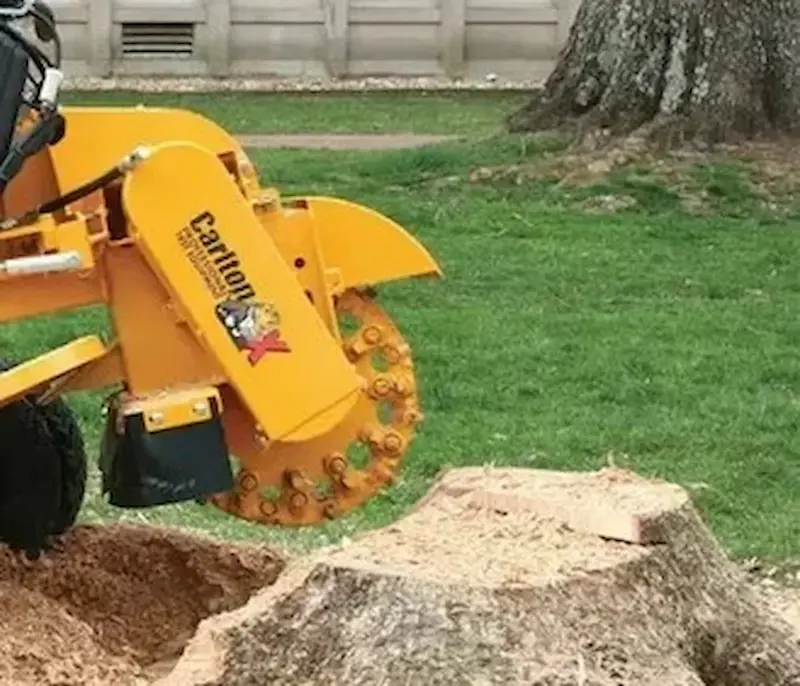
A stump grinder does not pull the whole stump out of the ground. It uses a fast-moving cutting wheel to work through the wood progressively, taking the stump down a little at a time until the remaining stump is below the surrounding ground level.
Grinding the Stump Down in Layers
We do not try to remove the stump in one pass. The cutting wheel moves across the exposed wood, shaving material away and turning it into wood chips. Each pass works farther into the stump until the main mass of wood has been reduced.
The Grinder Is Positioned at the Stump
The machine has to be positioned where the cutting wheel can reach the stump properly. The operator then controls how the wheel meets the wood rather than simply driving straight through it.
The Cutting Wheel Works Across the Wood
The wheel passes back and forth across the stump. Its cutting teeth remove small amounts of wood with each movement instead of trying to break the entire stump apart at once.
The Stump Gets Smaller Pass by Pass
As the upper wood disappears, the grinder works progressively lower. Large or irregular stumps require more passes because there is simply more material for the machine to work through.
Wood Becomes a Mixture of Chips and Soil
Instead of leaving one solid stump, the grinding process turns the worked portion into loose wood chips mixed with material from around the stump. What happens with that material depends on the scope of the job.
How Deep Should a Stump Be Ground?
There is no single grinding depth that makes sense for every stump. The right depth depends on what you want to do with the area after the stump is gone.
The Right Depth Depends on What Comes Next
If the goal is simply to get the stump below the surface and make the yard easier to use, the job may not need the same depth as an area being prepared for new grass, landscaping, or another project.
That is why one of the first things we want to know is what you plan to do with the space afterward. The finished use helps determine how much of the stump needs to be worked down.
What Do You Want to Do With the Area?
Restore the Lawn
The stump needs to be low enough to leave room for soil and a usable surface where grass can be re-established.
Add Mulch or Landscaping
The target depth depends on the finished grade and what will cover or occupy the former stump location.
Plant Something Else
Grinding can open the surface area, but remaining wood and roots below ground still need to be considered before planting.
Build or Pave Over the Area
A foundation, slab, driveway, or deep excavation may require more underground clearance than stump grinding alone provides.
Grinding Deeper Does Not Remove the Entire Root System
Stump grinding works on the stump and the wood immediately around it. Roots can extend much farther through the soil. If a project requires the stump and roots to be completely excavated, that is different from normal stump grinding.
Stump Size, Surface Roots, and What Is Underground
A stump is rarely just the round section you can see from above. The base may widen at ground level, large roots may spread across the surface, and obstacles around the stump can affect how the grinding work needs to be approached.
The Diameter Is More Than the Visible Center of the Stump
When we look at stump size, we are not only looking at the flat cut surface left by the tree. The trunk often widens where it reaches the ground, creating a root flare that can make the actual grinding area considerably larger.
Some stumps also have major roots running along the surface. Those roots may need to be considered if they interfere with the way you want to use the area after grinding.
Underground and Nearby Obstacles Need to Be Considered
A cutting wheel is designed to work through wood, not through unknown objects around the stump. Rocks, concrete edging, irrigation components, buried cables or lines, old fence hardware, and metal left inside or beside a stump can all affect the job.
If you know about irrigation, wiring, pipes, landscape lighting, buried structures, or anything else close to the stump, tell us before the work begins. Known underground features need to be considered before the grinder is positioned and used.
Important: telling us about known buried features does not mean every underground utility or obstacle can be identified simply by looking at the stump.
Can a Stump Grinder Reach a Tight or Difficult Area?
Often, the first question is not whether a stump can be ground. It is whether the grinder can safely reach it. Backyards, narrow gates, fences, slopes, soft ground, and limited space around a house can all change how the job needs to be planned.
Getting the Grinder to the Stump
A stump may be easy to see but difficult to reach. The route from the driveway or street to the stump matters because the machine needs enough usable space along the entire path, not just around the stump itself.
Gates, fences, walls, sheds, house corners, landscaping, and other fixed features can limit the available passage. Rather than giving every property a fixed minimum width, we look at whether the actual machine being used can fit through the available access.
Slopes, Soft Ground, and Yard Access
Access is also about the ground under the machine. A steep slope, wet lawn, soft soil, steps, retaining walls, or uneven terrain can make the route more difficult even when there appears to be enough room.
We also consider how far the stump is from a driveway or other firm access point. A machine traveling across a soft or saturated yard can affect the grass or soil, so the condition of the route should be considered before work begins.
Gate and passage width
Fences and fixed obstacles
Slopes and uneven ground
Wet or soft soil
Distance from firm access
Not every property presents the same risk. The machine has to travel across the actual ground conditions that exist on the day of the job. That is why access, soil firmness, slope, and the route to the stump need to be looked at rather than promising that there will never be any effect on the lawn or surrounding ground.
What Happens to the Wood Chips After Stump Grinding?
Stump grinding does not make the wood disappear. The cutting wheel turns the stump into a loose mixture of wood chips and soil, and a large stump can produce more material than many homeowners expect.
How much material is left depends on the size of the stump, how much of it is ground, and what you want done with the area afterward.
Grinding Can Produce More Material Than Expected
A wide stump, large root flare, or several stumps can create a substantial amount of grindings. What looked like one solid stump before the job becomes loose material once the cutting wheel has worked through it.
Can the Grindings Stay on the Property?
Yes, leaving the grindings on site may make sense if you want to use the material around the property. Just keep in mind that stump grindings are usually a mixture of wood and soil, not the same thing as clean decorative mulch.
What Happens to the Hole?
Once the solid stump has been ground away, the area may contain loose grindings and disturbed soil. Depending on what you want to do next, some material may stay in place, some may be removed, or additional soil may be needed to bring the area back toward the desired grade.
The Ground Can Settle After Stump Grinding
Loose grindings and disturbed soil can settle over time as the wood breaks down and the ground compacts. If the goal is a finished lawn or landscaped area, additional soil or leveling may eventually be needed.
What We Do With the Grindings Depends on What You Want Next
Depending on what you want done with the area, we can discuss leaving the grindings on site, spreading them, removing them, or backfilling and leveling the area. The exact cleanup included with the job will be confirmed in the estimate.
Can a Tree Grow Back After Stump Grinding?
Grinding removes the main stump, but it does not remove every root extending through the soil. Depending on the tree, some remaining roots can still produce new shoots after the stump has been ground.
Grinding the Stump Is Not the Same as Removing Every Root
When we grind a stump, we work through the main stump and the wood immediately around it. The large root system that once supported the tree can extend much farther beyond the grinding area.
Those remaining roots usually stay underground and gradually break down over time. But with some trees, living roots can continue to send up shoots even though the original stump has been removed from the surface.
The Main Stump
The visible stump and the wood immediately around the base are reduced below the surrounding ground level.
Roots Farther Out
Roots extending away from the stump can remain in the soil because normal stump grinding does not excavate the entire root system.
New Shoots
Some trees can produce shoots from surviving roots. That does not mean the old stump has returned, but it does mean new growth may need to be dealt with.
Stump Grinding Solves the Stump Problem — Not Every Root Underground
If your goal is to remove the stump from the surface and make the area usable again, stump grinding is usually the right approach. If new shoots appear later, they can be dealt with separately. If a project requires the entire root system to be excavated, that is a different type of work.
How Much Does Stump Grinding Cost in Spartanburg, SC?
For a typical residential stump in the Spartanburg area, stump grinding often falls somewhere between $75 and $400+. The biggest factor is usually the actual size of the stump at ground level, but access, surface roots, grinding depth, and cleanup can all change the final price.
Per stump as a general Upstate South Carolina planning range. Your actual estimate depends on the stump and property.
Typical Stump Grinding Price Ranges
Diameter is normally measured around the widest part of the stump at ground level, where the base and root flare can make it wider than the cut surface above.
We Price the Stump That Is Actually in Front of Us
Two stumps that look similar from a distance can require very different amounts of work. These are the things we look at when working out the estimate.
Diameter and Root Flare
More wood means more cutting. A wide base or large root flare can make the grinding area much bigger than the top of the stump suggests.
Number of Stumps
Several stumps on the same property can often be handled more efficiently in one visit than scheduling each stump separately. Each stump still adds its own grinding work.
Grinding Depth
Grinding only enough to get below grade is different from working deeper because you want to restore the lawn or prepare the area for another use.
Large Surface Roots
Major roots spreading across the surface increase the amount of wood that may need to be ground if they are part of the area you want cleared.
Access and Terrain
A stump beside a driveway is different from one behind a narrow gate, down a slope, or across soft ground. Getting the machine into position is part of the job.
Obstacles Around the Stump
Rocks, edging, fences, structures, known buried features, and other obstacles can slow the work or limit how the grinder can approach the stump.
Chips and Cleanup
Leaving grindings on site is a different scope from removing material, bringing in soil, backfilling, or leveling the area for what you want to do next.
Let Us Look at Them Together
If you have several stumps, show us all of them when you request the estimate. With the machine already on the property, multiple stumps can often be priced more efficiently as one job than as separate visits.
How Our Stump Grinding Process Works
Every stump is a little different, but the job follows the same basic logic: we look at the stump itself, make sure we can reach it, check what is around it, grind it to the depth needed for your plans, and leave the area according to the cleanup we agreed on.
We Look at the Whole Stump
I want to see more than the cut surface. The actual grinding area can include the root flare, irregular edges, multiple stems, and large surface roots around the base.
We Check How the Grinder Will Reach It
The route matters. Gates, fences, slopes, soft ground, walls, landscaping, and the distance from firm access all need to be considered before the machine moves toward the stump.
We Check the Area Around the Stump
Rocks, concrete edging, fencing, irrigation components, known buried lines, metal, and other nearby obstacles can affect how the stump needs to be approached.
We Grind the Stump Progressively
The cutting wheel works through the stump a layer at a time. We continue until the stump has been reduced to the depth that makes sense for what you want to do with the area next.
We Deal With the Area the Way We Agreed
Depending on what you want done next, the grindings may be left, spread, removed, or the area may be backfilled and leveled. We establish that before the job so you know what the finished area is supposed to look like.
What Should You Do Before Stump Grinding?
Most of the preparation is simple. The main goal is to give us clear access and make sure we know about anything around the stump that could affect the work.
Move vehicles, furniture, toys, hoses, and loose objects away from the access route when needed.
Make sure gates or other access points can be opened before the machine needs to pass through.
Tell us about known irrigation, wiring, pipes, landscape lighting, or other buried features close to the stump.
Keep pets and other unnecessary activity away from the immediate work area while the grinder is operating.
There is no useful one-size-fits-all answer. A small stump with open access is a very different job from a large stump with a wide root flare, major surface roots, difficult access, or a deeper grinding requirement. The stump itself and the conditions around it determine how long the work takes.
You also do not automatically need to stay beside the job from start to finish. What matters is that access, the work area, and what you want done afterward are clear before we begin.
If you know about irrigation, wiring, pipes, landscape lighting, buried structures, or anything else close to the stump, tell us before the work begins. For information about underground utility marking in South Carolina, visit South Carolina 811 .
What Can You Do With the Area After Stump Grinding?
Once the stump has been ground below the surface, what happens next depends on how you want to use the space. A lawn or landscaped area has very different requirements from a driveway, slab, foundation, or other construction project.
Grass, Mulch, and Landscaping After Grinding
If your goal is to put the area back into normal yard use, stump grinding usually gives us a practical starting point. The ground can then be prepared according to what you want the finished space to become.
Expect some settling. Ground stump material and disturbed soil can settle as the wood breaks down. If you want a finished lawn, additional soil or leveling may be needed later.
Planning to Build or Pave Over the Area?
Tell us before we grind the stump if you are planning a driveway, slab, foundation, wall, or other structure in that exact location. That changes what needs to be considered.
Roots, wood, and disturbed organic material can remain underground after normal stump grinding. For a project that needs stable, properly prepared ground at greater depth, those remaining materials may need to be addressed separately.
For ordinary yard restoration, stump grinding is often exactly what is needed. For construction or paving directly over the old stump location, the requirements of the project determine whether grinding alone is enough.
When Is Stump Grinding Not the Right Method?
Stump grinding is the right solution for a lot of residential properties, but it does have limits. If your project requires everything below ground to be removed, the grinder cannot reach the stump properly, or something underground prevents safe cutting, we need to look at a different approach.
The question is not simply whether the stump can be ground. The real question is whether grinding will leave the site ready for what you plan to do next.
When the Stump and Roots Need to Be Excavated
Grinding reduces the stump below the surface, but it does not remove every root extending through the ground. If the project requires the entire stump base and surrounding root material to be dug out, normal stump grinding is not the same job.
When a Structure Needs Stable Ground Below the Stump
If you are putting a foundation, slab, wall, pavement, or another structure directly over the old stump location, leaving roots and decomposing wood underground may not meet the requirements of that project. That needs to be considered before we grind.
When the Grinder Cannot Reach the Stump
Sometimes the problem is not the stump at all. A gate that is too narrow for the machine being used, steps, retaining walls, severe slopes, buildings, fencing, or other fixed obstacles can prevent the grinder from reaching a workable position.
When Something Around the Stump Prevents Safe Grinding
Concrete, large rocks, metal, known buried utilities, irrigation, structures, or other obstacles can limit where the cutting wheel can work. If those obstacles cannot be dealt with or avoided, the stump may need a different solution.
Grinding Clears the Stump From the Surface. Excavation Removes More Below Ground.
If you want the stump out of the way so you can mow, landscape, restore the yard, or reuse the surface, grinding is usually the practical choice. If your project requires the entire stump base and root area to be physically dug out, tell us before the work starts so we can determine whether stump grinding is the right method for that location.
Stump Grinding for Spartanburg Homes and Properties
Stump grinding around Spartanburg is rarely just about the stump. We also have to look at how the property is laid out, how we can reach the work area, and what the ground is like around it.
A lot of stump grinding work around Spartanburg happens in established residential yards where the stump may sit close to a house, fence, driveway, lawn, or landscaped area.
Backyard access can matter as much as stump size. Gates, narrow side yards, sheds, fencing, and other fixed features can determine how the grinder reaches the work area.
Properties across Spartanburg County can include sloped, uneven, or soft ground. The route from a driveway or firm access point to the stump has to work for the machine as well.
Older trees can leave behind wide stumps, heavy root flares, and large surface roots. What looks manageable from the cut surface can be much larger once we look at the full base.
Whether the stump is beside the driveway, behind a fence, down a slope, or sitting in the middle of the yard, I want to see the stump and the access around it. That tells us what the job actually requires before the grinder ever starts cutting.
Stump Grinding Questions We Hear From Spartanburg Homeowners
These are the questions I usually want answered before we decide exactly how the stump should be handled.
01
How Much Does Stump Grinding Cost in Spartanburg, SC?
The price depends mainly on the stump’s diameter at ground level, root flare, surface roots, access, grinding depth, and what you want done with the grindings afterward. A small stump beside a driveway is a different job from a large stump behind a fence with heavy surface roots.
I price the stump and the actual work required, then the estimate gives you the total before the job starts.
02
How Deep Does Stump Grinding Go?
I do not use one depth for every stump. The depth depends on what you want to do with the area afterward.
Restoring grass, adding mulch, landscaping, planting, or preparing for another project can all require a different finished depth.
03
Does Stump Grinding Remove All of the Roots?
No. Stump grinding removes the stump and works through the wood immediately around it, but roots can extend much farther through the ground.
If you need the complete stump base and root system physically excavated for a construction project, that is different from normal stump grinding.
04
Can a Tree Grow Back After the Stump Is Ground?
Sometimes. The main stump is gone, but some tree species can send up new shoots from living roots that remain farther out in the soil.
If that happens, the new growth can be dealt with separately.
05
Can You Grind a Stump Through a Narrow Gate?
It depends on the available route and the grinder being used. I need enough usable width from the access point all the way to the stump, not just enough room once the machine reaches the yard.
Gates, fences, walls, steps, slopes, and tight turns all matter when I look at whether the machine can reach the stump.
06
Can I Plant or Build Where a Stump Was Ground?
For grass, mulch, or many landscaping uses, the area can usually be prepared after the grindings are dealt with and the ground is brought back to the level you need.
Building, paving, or putting a foundation directly over the old stump location is different. Remaining roots and decomposing wood below ground may need to be removed or addressed before that type of project goes forward.
Need Stump Grinding in Spartanburg, SC?
Tell us where the stump is, roughly how large it is, and what access to the area looks like. We’ll look at the job and give you an estimate based on the stump, the property, and what you want done afterward.
Serving Spartanburg & Spartanburg County